

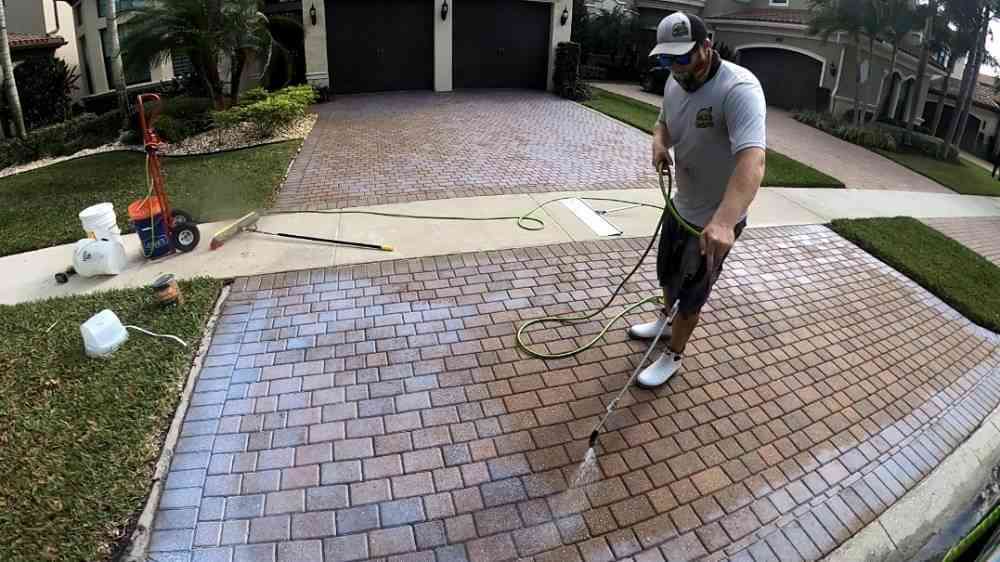
You know that feeling when you see pavers right after a good rain? That rich color, the way they almost glow.
That’s what sealing does. Permanently.
But here’s what most people don’t get—sealing isn’t just about looks.
It’s protection. It’s preservation. And in Pompano Beach, with our weather, our humidity, our salt air? It’s pretty much non-negotiable if you want your pavers to last.
What Is Paver Sealing and Why It Matters
Paver sealing is applying a protective coating over your brick pavers, concrete pavers, or natural stone. Think of it like a clear shield that sits on top.
The sealer soaks into the paver. Some pool on the surface.
When you invest in paver sealing services, you’re essentially adding a barrier that protects against moisture, stains, mold, and fading caused by UV rays.
And look, unsealed pavers? They’re vulnerable. Rust stains from patio furniture. Oil spots. That weird discoloration from leaves sitting too long. Mold creeping in during our rainy season.
Sealed pavers resist all that.
The colors stay vibrant. The surface stays cleaner.
You’re not scrubbing out stains every other month. It just makes sense.
Why Paver Sealing Is Essential in Pompano Beach, FL
Pompano Beach isn’t exactly kind to outdoor surfaces.
We’ve got humidity that hovers around 75% most of the year.
Salt air from the ocean. Intense UV exposure. Rain that comes fast and heavy during summer months. Then there’s the heat—pavers bake under our sun.
All of this breaks down unsealed pavers faster than you’d think.
Mold and mildew love our climate.
They’ll settle into those pores, turn your pavers dark and slippery. Ants find their way into the joints, especially if you’re using regular sweep sand instead of polymeric.
The color? Fades to a washed-out version of what you started with.
Sealing stops most of this. Not all—nothing’s perfect—but it slows down the damage considerably. Your pavers last longer. They look better. That’s money saved down the road.
Types of Paver Sealers Explained
Not all sealers are created equal. You’ve got options, and the one you pick changes how your pavers look and perform.
Water-Based Sealers
These are the safer option if you’re concerned about fumes or environmental impact.
They dry clear, don’t yellow over time, and they’re easier to apply. But they don’t penetrate as deep, which means they wear faster under heavy traffic.
Solvent-Based Sealers
This is what most pros use. They penetrate deeper, last longer—sometimes up to five years depending on traffic and weather.
They give you that wet look, that color enhancement people want. The downside? Stronger fumes during application, longer dry times.
Matte Finish vs. Semi-Gloss
The finish is personal preference. Matte gives you that wet look without the shine. Your pavers look like they just got rained on, but there’s no gloss.
Semi-gloss has a bit of sheen to it. Both enhance color. Both protect. Just depends what aesthetic you’re after.
Some people think semi-gloss looks too plastic. Others love the shine. There’s no wrong answer here.
Signs Your Pavers Need Sealing
How do you know it’s time?
First, check the color. If your pavers look faded compared to when they were first installed, they need sealing. Fading happens from UV exposure—it’s unavoidable without protection.
Second, look for stains that won’t come out.
Rust spots, dark patches from vegetation, oil marks.
If you’re scrubbing and nothing’s happening, the paver’s absorbed the stain. Sealing would’ve prevented that.
Third, check for mold or mildew. If you see dark spots, green patches, or areas that feel slippery when wet, you’ve got growth.
Pressure washing takes it off, but it’ll come back unless you seal.
Fourth, inspect the joints. Is sand disappearing? Are weeds popping up? Ants building highways through your patio? The seal helps lock sand in place and makes it harder for vegetation and insects to take over.
And honestly, if you can’t remember the last time your pavers were sealed—or if they’ve never been sealed—it’s probably time.
Step-by-Step Paver Sealing Process
This isn’t a quick afternoon project. Done right, it takes time.
Cleaning
You start with pressure washing. Everything comes off—dirt, mold, old stains, whatever’s built up. Some patios are filthy. Years of neglect, mildew caked into the pores. It all has to go.
After pressure washing, you rinse thoroughly. A couple times. You don’t want any residue sitting on the surface because that’ll show through the sealer.
Stain Treatment
Once it’s clean, you check for stains. Rust is common—furniture legs, planters, metal decorations. For rust, a diluted muriatic acid mix works.
Half-and-half usually does it. You dab it on, let it foam and smoke a bit, scrub lightly. Most rust lifts right out.
Stubborn spots? Hit them with straight muriatic acid. It’s aggressive, but it works. Just be careful near concrete walkways or other surfaces you don’t want etched.
Drying
Everything needs to be bone dry before sealing. Any moisture trapped under the sealer will cause cloudiness, maybe even peeling later on. Depending on weather, this can take a full day.
Re-Sanding
If you’re using regular sweep sand, you’ll need to refill the joints before sealing. Otherwise the sealer just sits on the surface and washes away with the next rain.
Make sure the sand is smooth, level, no piles anywhere. Last thing you want is to seal over a mound of sand—you’ll have to scrape it off later, and you’re left with a dull spot.
Application
You apply sealer with a roller. Start at one edge, work your way across. The sealer is self-leveling, so you use a liberal amount. It might look like you’re overdoing it, but you want good saturation.
Avoid windy days. Leaves blow in, stick to wet sealer, and they’re there permanently. Keep an eye out.
You’ll notice the sealer goes on milky white. That’s normal. Give it 10-15 minutes and it clears up.
Drying
It’s tacky for about two to three hours. Don’t walk on it. Don’t let pets on it.
Anything that touches wet sealer transfers—dirt, leaves, whatever’s on your shoe soles.
Hot days speed up drying. Fall weather slows it down, which is actually better for absorption. The pavers have more time to soak it in.
Full cure takes longer, but you can walk on it after a few hours.
Best Time to Seal Pavers in Pompano Beach
Timing matters more than you think.
Fall is ideal. Temperatures are milder, humidity drops a bit, and you’re not dealing with daily afternoon thunderstorms.
The sealer absorbs slower, which gives better penetration.
Spring works too, but you’re rolling the dice with rain. Summer? Forget it. The sealer dries too fast, you’re sweating through your shirt, and rain can hit any afternoon.
Winter is okay, but cooler temps mean longer dry times.
And never seal in direct sun if you can avoid it. Early morning or late afternoon works best. The surface isn’t scorching hot, the sealer doesn’t flash-dry before it penetrates.
Cost of Paver Sealing in Pompano Beach, FL
Prices vary based on square footage, condition, and who you hire.
For a professional job, expect somewhere between $1.50 to $3.50 per square foot.
A standard 500-square-foot patio might run $750 to $1,750. That usually includes cleaning, stain treatment, re-sanding if needed, and one coat of sealer.
Some companies charge extra for stain removal or repairs. Others bundle it.
A second coat adds cost but extends the life of the seal.
Some people do it, some don’t. It’s not required, but it does give extra protection.
Material quality affects price too. Cheap sealer wears out faster. You’ll be resealing in a year or two instead of five.
DIY vs Professional Paver Sealing
Can you do this yourself? Sure.
Should you? Depends.
DIY Pros: You save on labor. Materials run a few hundred bucks depending on square footage. You control the timeline.
DIY Cons: You need equipment—pressure washer, roller, sometimes a sprayer. You need to know what you’re doing with muriatic acid (it’s not forgiving). Application errors show. Streaks, missed spots, over-application that stays tacky. And if you mess up, fixing it costs more than hiring a pro from the start.
Professional Pros: They’ve done hundreds of jobs. They know how to handle stains, how much sealer to use, how to avoid common mistakes. The finish looks even. No learning curve on your dime.
Professional Cons: It costs more upfront. You’re relying on their schedule.
Honestly, for most people, hiring a pro makes sense. The difference in finish quality is noticeable.
How to Choose a Paver Sealing Contractor in Pompano Beach
Not all contractors are equal. Some cut corners. Some use cheap materials. Some don’t prep properly.
Here’s what to look for:
Experience: How long have they been sealing pavers? Ask for photos of past work. If they can’t show you completed projects, walk away.
References: Talk to past clients. Were they happy? Did the sealer hold up? Any issues?
Process: A good contractor explains their process. Cleaning, stain treatment, drying time, sealer type, number of coats. If they rush through this or dodge questions, red flag.
Materials: What sealer do they use? Brand matters. Water-based or solvent-based? Matte or semi-gloss? They should offer options and explain the differences.
Warranty: Do they stand behind their work? What happens if the sealer fails prematurely?
Price: Get multiple quotes. If one’s way cheaper than the others, there’s a reason. Usually it’s inferior materials or skipped steps.
And don’t hire based on price alone. Cheap work costs more when you have to redo it.
Maintenance Tips After Sealing
Sealing isn’t a one-and-done thing. You’ve got to maintain it.
Regular Cleaning: Sweep or blow off debris regularly. Hose down the pavers every few weeks. Dirt and grime still accumulate, even on sealed surfaces.
Avoid Harsh Chemicals: Don’t use acidic cleaners or degreasers on sealed pavers. They break down the sealer faster.
Reseal as Needed: Depending on traffic and weather, you’ll need to reseal every three to five years. Maybe sooner in high-traffic areas.
Watch for Wear: If you notice the color fading again or water stops beading on the surface, the sealer’s wearing thin. Time to reseal.
Address Stains Quickly: Sealed pavers resist stains, but they’re not stain-proof. Clean spills promptly.
The seal protects, but it’s not invincible. A little care goes a long way.
Final Thoughts
Paver sealing isn’t glamorous. It’s not the fun part of having a beautiful outdoor space.
But it’s what keeps that space beautiful. It’s what makes your investment last.
In Pompano Beach, with everything working against your pavers—sun, salt, rain, humidity—sealing is one of the smartest moves you can make.
The colors stay rich. The surface stays cleaner. The pavers hold up year after year.
And when your neighbors are replacing faded, stained pavers, yours still look like they did the day they were installed.
