

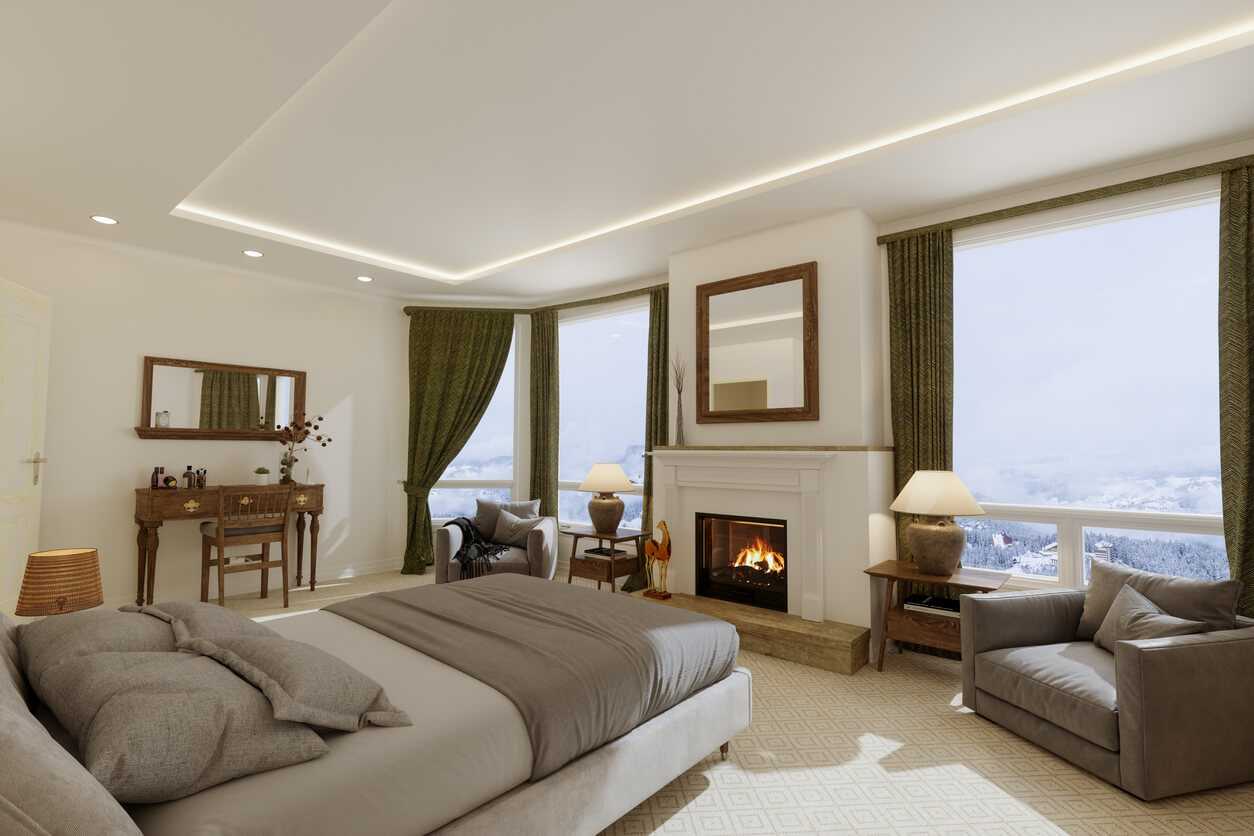
What actually makes a home feel inviting? I’ve been writing about homes for over 15 years now, and it’s never really about the price tag or how trendy your furniture is.
It’s something else entirely.
You know that feeling when you walk into someone’s place and immediately feel… good? Like you can actually relax? That’s what we’re after here. And honestly, it doesn’t require a renovation or expensive purchases.
Most of it comes down to understanding a few key principles that work no matter the season.
I’m going to walk you through eight practical ways to make your home feel more welcoming throughout the entire year.
Some of these I’ve learned from interviewing designers, others from my own mistakes (and trust me, there have been plenty).
8 Smart Ways To Make Your Home Feel More Inviting Year-Round
Focus on Lighting
Here’s something most people get wrong. They think lighting is just about brightness. It’s not.
I remember visiting a beautifully decorated loft in Manhattan once.
Expensive art, designer furniture, the works. But the lighting? Terrible. Single overhead fixture blasting harsh blue-white light.
Made everyone look exhausted and the whole space feel like a hospital waiting room.
You want layers. That’s the secret.
Different light sources at different heights doing different jobs.
A floor lamp in the corner for ambiance.
A table lamp for reading. Maybe some sconces if you’re feeling fancy.
The ceiling light should honestly be your last resort for most rooms.
And dimmers. Get dimmers installed if you can.
They’re not that expensive and the difference is massive.
Being able to adjust brightness based on time of day or activity changes everything.
Morning coffee with softer light hits different than harsh overhead glare.
Color temperature matters too. I stick with warm white bulbs (around 2700K-3000K) in living spaces.
Saves the cooler daylight bulbs for task areas like the kitchen or home office where you actually need to see what you’re doing.
One more thing – if you’re in a rental or can’t install much, just swap out your bulbs and add a couple plug-in lamps. That alone will transform your space.
Incorporate Seasonal Textures
This is where things get interesting year-round. Your home shouldn’t feel static.
In colder months, I swap in heavier textiles.
Chunky knit throws, velvet cushions, maybe a faux fur draped somewhere.
These instantly make a space feel warmer and more inviting when it’s freezing outside.
The texture is doing psychological work on your brain, making you feel cozy before you even sit down.
When spring rolls around, I lighten things up. Cotton covers replace velvet. Linen comes out of storage.
The whole place literally breathes easier. Same furniture, completely different feeling.
This doesn’t mean you need two complete sets of everything. Start small. Three or four cushion covers.
A throw blanket or two. A different material for your bedding.
Once you start weighing that kind of seasonal versatility against what you currently sleep on, it becomes easier to see why so many people choose to shop wool mattresses when they’re ready to upgrade the foundation of their rest.
The point is that these small changes signal to your brain that your home is being cared for and adapted to the current moment. That feeling of intentionality makes any space more welcoming.
Use a Cohesive Color Palette
I used to think this meant everything had to match. It doesn’t.
What you want is colors that talk to each other. That sounds vague, I know.
Let me explain it differently.
Pick three to five colors that you genuinely like and repeat them throughout your space. Not evenly, not perfectly. Just make sure they show up.
My living room has warm terracotta, deep forest green, cream, and touches of rust.
Those colors appear in cushions, art, a vase, the rug. But I didn’t plan it all at once.
It built up over time as I made choices guided by those colors.
The mistake people make is bringing home random stuff in random colors because they like individual items. Then six months later their space feels chaotic and they can’t figure out why.
Your eye needs some kind of visual connection between objects to feel settled.
That said, don’t stress about this too much.
If you love something that doesn’t fit your palette, include it anyway.
I have a bright blue vintage lamp that doesn’t match anything else in my bedroom. I love it. It stays. Rules are helpful until they’re not.
Add Greenery and Natural Elements
I cannot overstate how much garden change a space.
Dead serious. I’ve walked into million-dollar homes that felt cold and empty, and tiny apartments that felt alive and welcoming.
The difference? Plants. Natural materials. Signs of life.
You don’t need to become a plant expert either.
Start with one easy plant. A pothos, maybe. Or a snake plant if you’re worried about killing things (they’re nearly indestructible). Put it somewhere you’ll see it every day.
The thing about plants is they introduce organic shapes into spaces that are otherwise full of straight lines and right angles. Our brains respond to that.
We’re wired to find nature calming and appealing.
Beyond plants, think about other natural materials.
Wood, stone, ceramics, linen, wool. These materials have texture and variation that synthetic stuff just can’t replicate.
A wooden bowl, a stone vase, a ceramic planter – these small touches accumulate into a feeling.
I also keep branches in a tall vase near my entryway.
Change them with the seasons. Bare branches in winter, cherry blossoms in spring, whatever I find interesting. Takes ten minutes, costs basically nothing, makes a real impact.
Maintain a Pleasant Scent
This one’s tricky because smell is so personal.
What I’ve learned is that it’s less about making your home smell amazing and more about making sure it doesn’t smell bad.
Opening windows regularly matters more than any candle you can buy.
I air out my place every morning, even in winter. Just ten minutes with windows wide open. Fresh air comes in, stale air goes out.
During colder months, I don’t leave them open long enough to cool down the walls, just enough to exchange the air.
If you want to add pleasant scents, go subtle.
A candle here, a diffuser there. I’m personally wary of those plug-in air fresheners because they’re often too intense.
When scent is overwhelming, it stops being welcoming and starts giving people headaches. I’ve experienced this in cars especially.
Someone’s trying so hard to make it smell good that it actually becomes unpleasant.
Also worth noting that some scents can bother pets. Do a quick check before buying anything if you have animals.
The goal is for people to walk in and think “this is nice” not “wow what is that smell.” Subtle always wins.
Declutter and Organize
I know this sounds obvious. Everyone says it. But it’s true and it’s free, so I’m saying it again.
Here’s my approach – everything visible should either be functional or meaningful. If it’s neither, find it a home in closed storage or get rid of it.
I use the one-minute rule religiously. If putting something away takes less than sixty seconds, I do it immediately. Hanging up a jacket. Returning scissors to the drawer.
Putting mail in its designated spot. These tiny actions prevent the accumulation of chaos.
The tricky part is creating systems that actually work for how you live.
I tried to keep my entryway minimalist once. Looked great. Didn’t work.
Coats ended up on chairs, shoes scattered everywhere.
So I installed more hooks and a proper shoe cabinet. Sometimes you need to design around your actual behavior rather than some ideal version of yourself.
But also, your home should look lived in.
Don’t make it so pristine that people are afraid to touch anything. That’s not inviting. That’s intimidating. I keep books stacked on my coffee table, a blanket casually draped on the sofa.
Perfectly styled disorder, if that makes sense.
Create Comfortable Gathering Spaces
Where do people naturally gather in your home? That’s where you should focus attention.
In most homes, it’s the kitchen, dining area, or living room.
These spaces need to be actually comfortable, not just pretty.
I’ve sat on too many beautiful chairs that are miserable after ten minutes. Pretty but uncomfortable is a failure.
Seating arrangements matter more than you’d think.
If your sofa faces a wall or everyone has to crane their neck to talk to each other, people won’t want to hang out there. Arrange furniture so people can see each other easily. Create conversation zones.
Lighting comes back here too. Gathering spaces need warm, adjustable light.
Nobody wants to socialize under fluorescent ceiling lights. Add lamps, use dimmers, create options.
And temperature. If your main gathering space is always too hot or too cold, people won’t want to spend time there. I keep my living room around 21-22°C, which seems to work for most people.
In summer I go slightly warmer to save on cooling costs, but comfort matters more than savings to a point.
Small details help too. Side tables near seating for drinks.
Coasters available. Cushions for back support. These practical considerations make spaces truly functional for gathering.
Personalize Your Space
This is the thing that separates a house from a home.
Your space should tell your story. Not in an obvious, look-at-my-achievement-wall kind of way. Just… evidence of who you are and what you care about.
I have a collection of vintage cameras on a shelf. I don’t use them.
I just think they’re beautiful and they remind me of trips I’ve taken. That’s enough reason to display them.
Maybe you love music – show that. Instrument on a stand, vinyl collection, concert posters framed nicely. Maybe you travel – bring back small objects that mean something to you.
Books you’ve actually read. Art you genuinely connect with.
The homes that feel most inviting to me are the ones that could only belong to the people living there.
You can sense someone’s taste, interests, history. That specificity is what creates warmth.
Generic decor makes generic spaces. You know what I mean – the stuff that looks like it came as a matching set from a catalog. Technically fine, but soulless.
Take your time building this too. Collections and personal touches develop over years. You can’t force it all at once.
Conclusion
Making your home feel inviting isn’t about following trends or spending a fortune. It’s about understanding what actually makes spaces feel good and being intentional about those elements.
Focus on the fundamentals – good lighting, pleasant scents, natural elements, personal touches.
Pay attention to seasonal changes. Keep things reasonably organized. Create spaces where people actually want to spend time.
I’ve been doing this long enough to know that the best homes aren’t the fanciest ones.
They’re the ones where someone clearly thought about how the space feels, not just how it looks. That’s what you’re going for.
Start with one or two ideas from this list and build from there.
Your home will thank you for it.
