

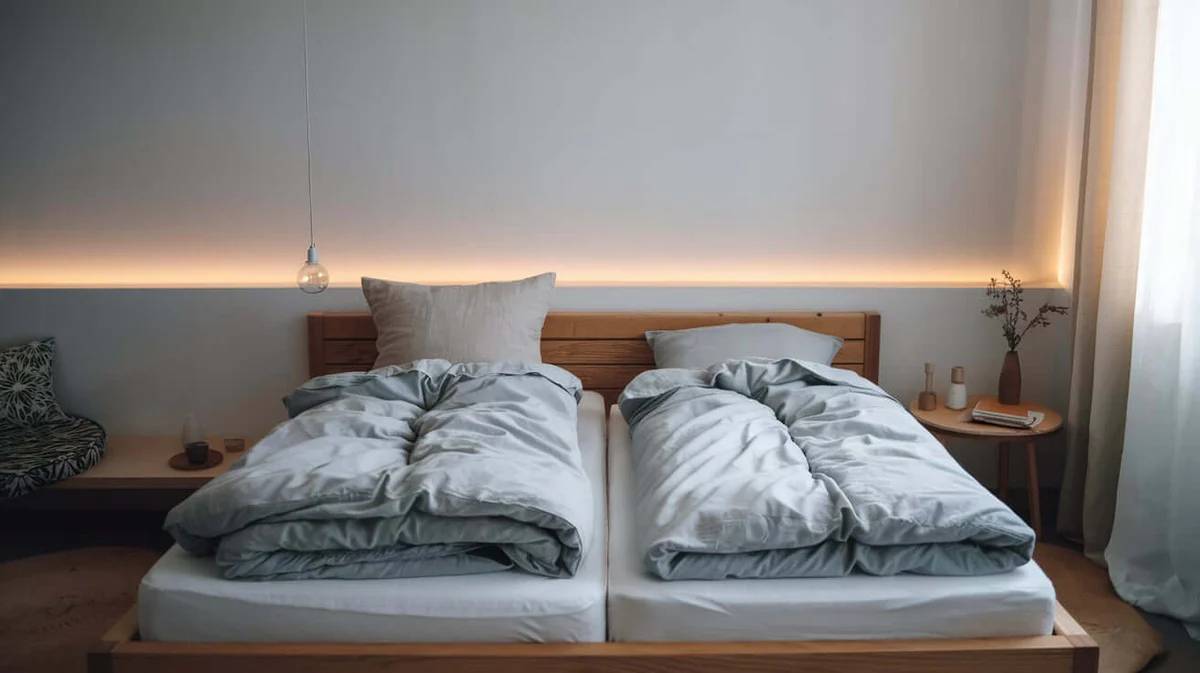
The most satisfying home upgrades are usually the ones you can feel immediately. In a bedroom, that often means improving the layers that touch your body most directly, from pillow support to fabric temperature to the overall softness of the bed.
Most people can describe the feeling of bad bedding even if they do not use technical language.
It is the sensation of waking up slightly tense, flipping the pillow to find a cooler side, or kicking the comforter away and pulling it back minutes later. Those little disruptions add up.
Comforters work harder than people think.
They influence temperature, the sensation of weight on the body, and whether the bed feels airy or oppressive.
The right one should feel soft and substantial without crossing into that clammy, overheated territory that breaks sleep halfway through the night.
Temperature balance often decides whether a comforter becomes a long-term favorite or a short-lived purchase.
People want softness and visual loft, but they also need bedding that does not swing too far toward stuffy warmth. That middle ground is what makes a bed feel usable through more of the year.
A temperature regulating comforter stands out because it addresses one of the most common sleep complaints directly.
People often do not need a dramatically warmer or cooler bed; they need a layer that helps them stay in a more comfortable middle zone through the night.
It is also easier to appreciate thoughtful bedding when you compare it with the small annoyances of a poor setup.
Constant refluffing, overheating, or waking up with soreness are easy to normalize, yet those problems often improve once the top layers of the bed are chosen more carefully.
The visual side matters too, especially for people who want the bed to feel polished without constant styling.
A comforter that keeps an even shape and soft drape makes the room look more put together while still serving its main job, which is helping the body settle into a comfortable rhythm.
Layering strategy matters too.
A comforter tends to perform better when the sheets underneath support airflow and when the room does not require constant temperature correction.
In that setting, loft feels comforting rather than overwhelming, which is exactly the balance many sleepers are after.
That perspective feels especially relevant for readers of backwards3.info, where lifestyle and practical home decisions often intersect.
People rarely need more noise around sleep products.
They need clear signals about what improves comfort, what holds up with regular use, and what actually makes a bedroom feel easier to enjoy across changing routines and seasons.
Comforters also shape how inviting the room feels before anyone even gets into bed.
Loft, drape, and softness all contribute to that first impression, and when those qualities are backed by real usability, the bed becomes a place people genuinely want to return to each evening.
In the end, a better bedroom usually comes from practical comfort decisions rather than dramatic changes.
When bedding supports the body well, feels pleasant on contact, and stays usable over time, sleep becomes simpler and more restorative.
One more reason comforters deserve careful attention is that they influence both physical comfort and emotional comfort at the same time.
The bed can feel like a place of relief or a place of constant adjustment, depending on how the top layer performs.
When loft, softness, and temperature stay in a balanced range, the whole room feels more settled.
That kind of reliability is what makes a comforter worth keeping in the long term instead of treating it as another purchase that looked appealing but never quite delivered.
