

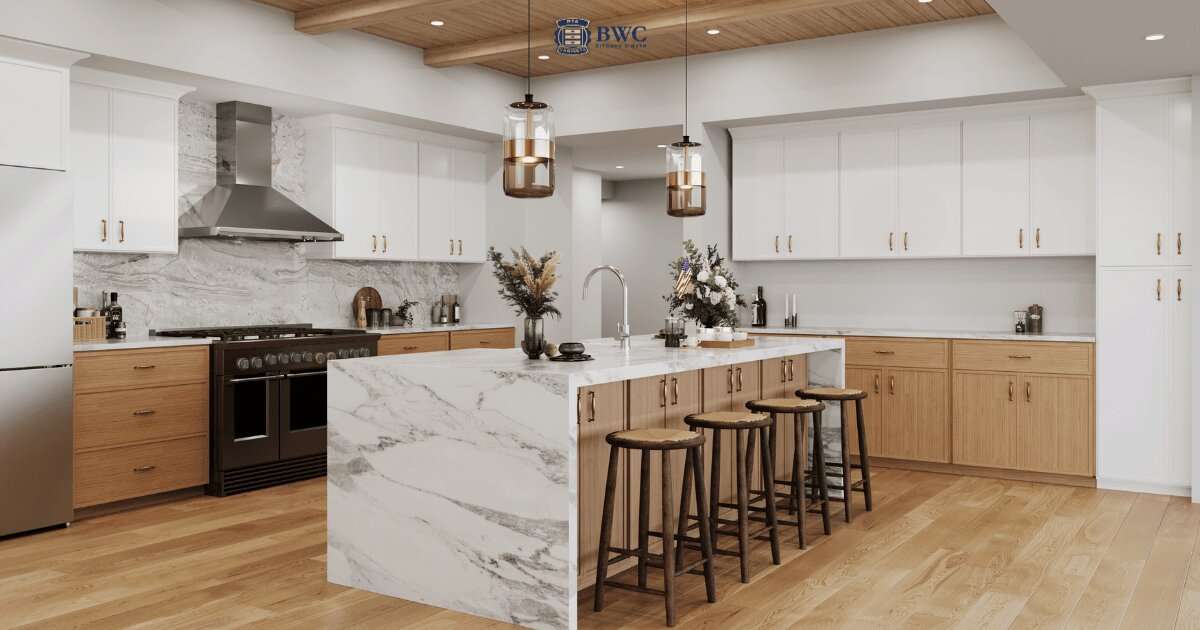
Most home buyers notice the kitchen first. Not the countertops, not the flooring, not the appliances – the cabinets. And the opinion they form isn’t really about price.
It’s about whether the kitchen feels well-built or whether it feels cheap.
Those are very different things, and they’re worth distinguishing carefully if there’s any chance the house is going on the market in the next ten years.
Here’s the part most homeowners get wrong: cabinet quality is what buyers respond to.
Cabinet cost is what showrooms charge. The two have less and less to do with each other in 2026, and the difference matters when it’s time to sell.
What Buyers Actually Notice About Cabinets
Anyone who’s spent time around real estate buyer feedback hears the same notes repeatedly.
Buyers say cabinets feel “solid” or “flimsy.” They say drawers feel “smooth” or “wobbly.” They say the wood looks “real” or “fake.” They almost never say “these cabinets must have cost a lot” – because cost isn’t a sensory experience. Quality is.
The specific things buyers respond to, whether they articulate it or not:
- The sound a drawer makes when it closes. Soft-close hinges and full-extension drawer glides produce a quiet, satisfying click. Cheap drawers slam.
- The weight of a cabinet door. Solid wood doors have heft. Particleboard with a thermofoil wrap feels hollow when you pull it.
- The visible joinery on drawer boxes. Dovetail joints signal craftsmanship. Stapled or glued corners signal a budget cabinet that isn’t going to age well.
- The finish under the door. A cabinet’s interior tells the truth. Plywood interiors with sealed edges look professional. Bare particleboard with exposed edges looks like a kitchen that won’t survive the next owner’s cleaning supplies.
None of these signals correlate cleanly with how much the cabinets cost.
They correlate with how the cabinets were built. And in 2026, the gap between cost and quality has widened to the point where it’s possible to install genuinely high-quality cabinets at a price that won’t dent the renovation budget.
The Cabinet Industry’s Best-Kept Pricing Secret
For most of the past decade, kitchen cabinet pricing followed a predictable rule: better quality costs more money. That rule is breaking down.
The reason is the rise of direct-to-consumer wholesale channels, which now ship cabinets – same factories, same construction specs, same finishes – at roughly half the price of comparable cabinets sold through traditional showrooms.
A practical example.
A semi-custom shaker cabinet from a national brand showroom, built with a solid wood face frame, plywood box, soft-close hinges, and dovetail drawers, runs roughly $300–$500 per linear foot installed.
The same cabinet, built to the same specs, ordered from a wholesale kitchen cabinets online supplier and assembled on site, runs roughly $130–$200 per linear foot.
The buyer touring the finished kitchen cannot tell which cabinet was which.
The appraiser writing up the property won’t tell which cabinet was which.
Wholesale cabinets typically run 45–50% less than the same specs from a traditional retailer – and that price difference shows up only on the homeowner’s invoice, not in the eventual sale price.
This is the part of the cabinet market that most homeowners haven’t internalized yet.
The retail price of a cabinet has very little to do with its quality, and quite a lot to do with the cost of the showroom that sold it.
Showroom rent, regional warehousing for fully assembled inventory, freight at four times the volume of flat-pack shipping – all of those costs ride on the cabinet’s price tag, and none of them make the cabinet better.
Which means that for resale-minded homeowners, the rational move is to buy the highest-quality cabinet construction available, but to source it through the channel that doesn’t charge for the showroom experience.
The kitchen looks identical when it’s done. The renovation budget looks dramatically different.
Where the ROI Actually Comes From
A common misconception about kitchen renovations is that spending more produces a better resale return. The data says otherwise.
According to the 2025 Cost vs. Value Report by Zonda Home, a minor midrange kitchen remodel returns about 113% of its cost at sale – one of the few home improvement projects nationally that returns more than it costs.
A major midrange remodel returns roughly 49%. A major upscale one returns about 35%.
The pattern is consistent across nearly every U.S. market: the more expensive the kitchen, the smaller the share of its cost that gets recouped at sale.
This counterintuitive math hinges on the cabinet decision more than any other single line item.
A homeowner who spends $25,000 on a major-upscale custom cabinet package recoups roughly $12,500 of it at sale.
A homeowner who spends $9,000 on wholesale-channel cabinets of comparable construction quality, and redirects the savings to countertops, fixtures, and contingency, finishes with a kitchen that appraises essentially the same and walks into the closing with $14,000 more equity in the house.
That’s the case for cabinet quality without cabinet excess: not that wholesale cabinets are cheap, but that the resale market doesn’t reward the showroom premium.
Buyers respond to how the kitchen looks and feels, not to which logo was on the cabinet box.
Spending the showroom premium is essentially a tax on the renovation that produces no return at sale.
The Decisions That Actually Matter for Resale
For homeowners thinking about resale value during a kitchen renovation, the cabinet decisions that move the needle are these:
Construction specs over brand name. Solid wood face frames, plywood (not particleboard) boxes, soft-close hardware, and dovetail drawer joinery – these specs are visible to careful buyers and to appraisers. Anything else is the showroom premium.
Neutral, durable finishes over trend colors. White, off-white, gray, and natural wood tones age better than the trend color of the moment. A kitchen renovated in trend-of-the-year sage green will look dated four years before a kitchen renovated in classic white.
Standard layouts over personal quirks. Resale-minded renovations should keep the kitchen layout within 10 feet of standard. Buyers don’t reward eccentricity; they reward kitchens that look like they were designed for a family rather than for the previous owner specifically.
Quality hardware over cabinet upgrades. Modern matte black, brushed brass, or unlacquered brass hardware on quality wholesale cabinets reads more expensive than mediocre hardware on showroom cabinets. The hardware budget is a tiny percentage of the project; treat it like the styling decision it is.
The kitchen that sells fastest, in 2026 as in any other year, is the one that reads as well-built and recently updated.
The one that doesn’t sell – that sits on the market for three months while the agent quietly suggests a price reduction – is usually the one where someone overspent on cabinets and underspent on everything else.
Cabinet quality is what buyers see.
Cabinet cost is what the homeowner remembers.
For anyone planning to sell in the next decade, those two should be decoupled deliberately, and the savings put somewhere that actually shows up at closing.
