

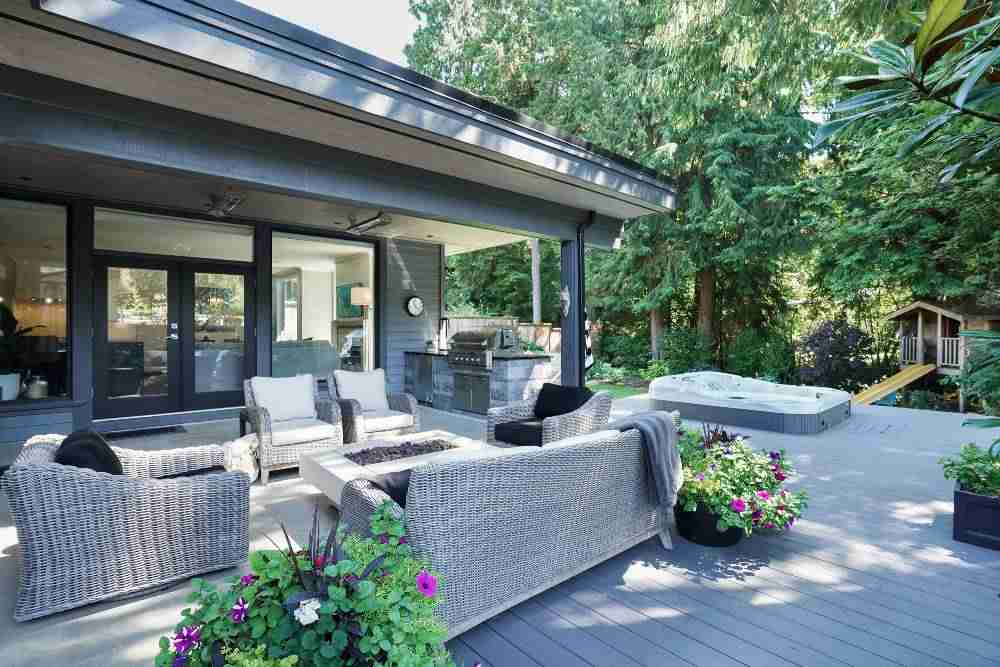
Outdoor space only becomes part of your life if it earns it.
Otherwise, it just exists in the background.
You pass it on your way in, glance at it through a window, maybe think you’ll use it later, and then you don’t.
If stepping outside feels like a separate decision instead of a natural next step, the space never really becomes part of your routine.
Living in New York makes that even more obvious because there’s less room for things that don’t work right away.
You’re not stepping outside just because the space is there; it has to feel easy, quick, and worth it in the moment.
If something feels slightly off, too exposed, too cold, too inconvenient, you’re back inside without thinking twice.
The outdoor spots that do get used are the ones that feel like they belong to your day already, the ones that don’t ask you to stop what you’re doing just to use them.
Making Covered Spaces Part of Daily Use
A covered area outside changes the way you think about stepping out without you even realizing it.
Without coverage, there’s always something in the back of your mind, the sun feels too strong, the air feels unpredictable, or you just don’t feel like dealing with it for a short break.
This hesitation builds into a habit, and before long, you stop using the space altogether unless everything lines up perfectly.
Once there’s proper coverage, that hesitation fades out.
You stop checking conditions and start treating the space like it’s always available.
You step out for a minute, then stay longer, and it becomes part of your movement instead of something separate.
Getting that right is where working with a New York roofing company actually matters, because the structure has to feel like it belongs to the house, not like an add-on that still leaves you thinking twice.
Creating Comfort Through Privacy
An outdoor space can look great and still feel off if it’s too open.
You sit down, but something keeps you from settling in fully.
Maybe it’s the sense of being visible, maybe it’s the constant movement around you, or maybe it’s just the lack of any boundary that makes it feel temporary.
You don’t always notice it directly, but you leave sooner than you planned.
Adding a bit of privacy shifts that feeling in a way that’s hard to explain until you experience it.
The space starts to feel contained, as it belongs to you instead of blending into everything around it.
You sit longer, you relax more, and you stop thinking about what’s outside the space.
Flexibility Through Furniture Choices
Outdoor setups tend to fall flat when they only work for one specific use.
A chair that only works for sitting or a table that only fits one type of activity limits how often you’ll use the space.
Most days don’t match that exact setup, so the space gets skipped without much thought.
When the furniture adapts to different moments, the space starts fitting into your day more naturally.
You step outside for a quick task, end up sitting for a bit, and maybe stay longer than expected.
It doesn’t require planning because it works for whatever you’re already doing.
Extending Use into Cooler Conditions
Temperature plays a bigger role in outdoor use than most people admit.
You might step outside and feel fine at first, but once the air shifts even slightly, your time out there shortens without you planning it.
It’s not dramatic, just enough to make you head back in sooner than you would have otherwise.
Adding warmth changes how long you stay in a very real way.
The space stops feeling limited by the weather, and you don’t feel pushed inside as quickly.
You step out knowing you can stay, and that changes how often you go out in the first place.
Giving Each Area a Reason to Be Used
Outdoor spaces get ignored when everything feels like one open, undefined area.
You step outside, look around, and there’s no clear reason to stay in one spot over another. Without structure, the space feels temporary, like you’re just passing through instead of settling in.
Breaking it into small, intentional zones changes that completely.
A spot for sitting, a corner for quick tasks, another for just standing and taking a moment.
Once those areas exist, movement becomes effortless because there’s always somewhere to land.
Reducing Noise Without Closing Yourself Off
Outdoor noise has a way of pulling you out of the moment.
Traffic, nearby conversations, random background sounds, they don’t always seem loud, but they keep the space from feeling settled.
You sit down, but your attention keeps shifting, and before long, you’re back inside without really knowing why.
Adding sound control changes that experience in a subtle but noticeable way.
It doesn’t block everything out, but it softens the edges enough for the space to feel calmer.
Once that constant interruption fades, you start staying longer without checking your surroundings.
Letting Landscaping Guide Movement
People don’t move randomly through a space, even when it feels like they are.
They follow what feels easiest, what looks clear, and what doesn’t require adjustment.
When landscaping doesn’t support that, movement gets awkward. You step around things, avoid certain areas, or just don’t go there at all.
When the layout aligns with how people naturally walk, everything shifts.
Paths feel obvious, corners feel accessible, and the whole area starts working with you instead of slowing you down.
You move through it without thinking, and that ease is what keeps the space active instead of unused.
Making the Step Outside Feel Effortless
The transition between inside and outside matters more than most people expect.
If there’s a small barrier, a step that feels off, a level change that interrupts your movement, it creates just enough friction to stop you from stepping out as often.
Smoothing that transition removes that pause entirely.
You move from inside to outside in one motion without adjusting your pace or thinking about it.
Keeping the View Open and Connected
When outdoor space feels cut off from the inside, it becomes easy to ignore.
You don’t see it as part of your environment, so it doesn’t come to mind when you’re moving through your day.
It sits there, separate, waiting to be used instead of being part of what you already do.
Reducing visual barriers changes that connection. You see the space more often, you notice it without trying, and it starts feeling closer than it actually is.
Outdoor living comes from whether that space fits into how you already live.
A few changes help define how often you step out, how long you stay, and whether the space feels like part of your routine or something separate from it.
Once those changes line up, the shift feels immediate.
