

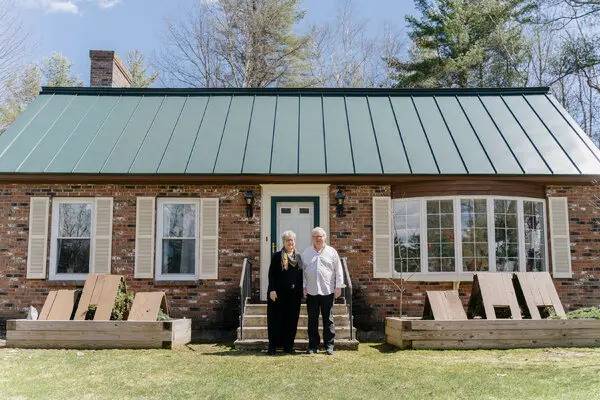
You know what I see a lot in my work? Families standing in their parents’ old house, looking around like they’ve just inherited a time capsule. And they have, really.
I’ve been writing about homes for 15 years now. Celebrity homes, family homes, homes that cost more than small countries. But the stories that stick with me? They’re the ones about families trying to figure out what to do with grandma’s 1970s ranch or dad’s split-level from 1985.
These homes have good bones. They have memories baked into the walls. But they don’t work anymore. Not for how we live now.
My friend Sarah called me last spring. Her dad had passed, and her mom couldn’t handle the three-story colonial anymore.
Sarah wanted to move in with her two kids, but the house was stuck in 1992.
She said to me, where do I even start?
That’s what this is about. Starting. And then actually doing it.
Assessing the Structural Integrity
First thing. Walk around the house and look at what’s actually there.
Not what you wish was there. Not what it could be with unlimited money. What’s there.
I had this moment years ago touring a 1960s home exterior Charlotte.
Beautiful lot, great neighborhood. But the foundation had a crack running through it like a lightning bolt.
The owners wanted to talk about open floor plans and kitchen islands. I wanted to talk about that crack.
Get someone who knows foundations to look at yours.
Get someone who knows roofs to climb up there. Because if water’s getting in, or if the bones are compromised, nothing else matters.
You can paint over problems. You can stage around them. But you can’t ignore physics.
Look for:
- Cracks in the foundation (small ones are normal, big ones are not)
- Sagging floors or ceilings
- Doors that won’t close right
- Water stains on ceilings or walls
- Musty smells in basements
Some of this you can fix. Some of it means you need to rethink the whole project.
I’ve seen families pour $80,000 into renovations only to discover later they needed $40,000 in foundation work first. Do it backwards and you’re just throwing money into a hole.
Reimagining Floor Plans for Open Living
Here’s where it gets fun.
Old homes were built with lots of little rooms. Formal living rooms nobody used.
Dining rooms for holiday dinners twice a year. Kitchens hidden away because cooking was work, not entertainment.
We don’t live like that anymore.
My own house was built in 1978. When I bought it, you couldn’t see from the kitchen into anything. I was cooking in a box.
So we took out a wall. Just one wall. And suddenly the whole first floor made sense.
You don’t have to gut everything. Sometimes it’s one wall.
Sometimes it’s widening a doorway. But think about how people actually move through a house now. We congregate. We want to see each other.
Kids doing homework while someone’s cooking while someone else is folding laundry.
That said, not every wall can come out. Load-bearing walls are real.
I watched a DIY show once where a couple started knocking out a wall before checking if it was holding up the second floor. Spoiler: it was.
Get an engineer. Or a contractor who knows what they’re looking at.
Then decide what walls earn their keep and which ones are just taking up space.
Upgrading Essential Systems
This is the unsexy part. Nobody gets excited about HVAC systems or electrical panels.
But I’m going to get excited about it for a second because this is where old homes fail modern families.
Electrical systems from the ’70s and ’80s weren’t built for how many devices we plug in now.
You’ve got phone chargers, laptops, tablets, TVs, kitchen appliances, and that’s before you add electric cars or home offices. Old systems trip breakers. They overheat. They’re honestly kind of scary.
Same with plumbing. Old galvanized pipes corrode.
Water pressure drops. And if you’re planning to add bathrooms or move plumbing around, you need to know what you’re working with.
Heating and cooling is its own thing. A lot of older homes have systems that are either dying or already dead but somehow still running.
Like a car that should’ve been retired five years ago but keeps sputtering along.
I know this stuff costs money. I know it’s not Instagram-worthy. But here’s the thing—you can have the most beautiful kitchen in the world, and if your air conditioning dies in July, nobody’s going to care about your backsplash.
Modernizing Kitchens and Bathrooms
Okay, now we can talk about the pretty stuff.
Kitchens and bathrooms sell houses. They also make or break how a family functions daily. And in older homes, these rooms are usually tiny, dark, or just plain weird.
I toured a 1950s bungalow once where the kitchen was so small, you couldn’t open the oven and the dishwasher at the same time. Like, physically couldn’t.
Someone had designed themselves into a corner.
Modern kitchens need:
- Counter space (more than you think)
- Storage that makes sense
- Good lighting
- Room for more than one person
You don’t need marble countertops or a six-burner range. You need a kitchen that works when life is happening fast.
Bathrooms are trickier. Old bathrooms have character, sure. But they also have pink tile from 1962 and tubs that nobody uses.
If you’re working with a bathroom that needs help, think about how people actually use it.
Morning routines. Multiple people getting ready. Storage for all the stuff that accumulates.
And here’s something I learned from a contractor in South Carolina: if your shower is original to a house built before 1990, it’s probably wasting water and leaking in ways you can’t see.
Instead, work with a reliable company that specializes in shower replacement in Greenville to improve water efficiency and durability.
That advice saved a family I know about $3,000 in water damage repairs they didn’t know they needed.
Improving Energy Efficiency and Sustainability
Let me tell you about insulation.
Nobody thinks about insulation until their heating bill arrives in January. Then suddenly everyone cares.
Older homes weren’t insulated the way we build now.
Sometimes they weren’t insulated at all. I’ve seen attics with insulation so thin you could read a newspaper through it. And that’s where your money goes. Right up and out.
Air sealing matters too. Old windows leak air like sieves.
Doors don’t seal right. You’re heating and cooling the outdoors.
Here’s what actually makes a difference:
- Insulation in attics and walls
- Decent windows (you don’t need top-of-the-line, just not terrible)
- Sealing gaps around doors and windows
- A programmable thermostat
- LED bulbs everywhere
Some families go all-in on solar panels and geothermal systems. Great if you can. But most of us just need to stop hemorrhaging money on utilities.
I replaced the windows in my house three years ago. Not fancy ones. Just decent double-pane windows.
My heating bill dropped by almost 30%. I did the math.
They’ll pay for themselves in about eight years. I’ll take it.
Enhancing Storage and Organization
Storage is where old homes really show their age.
Closets were smaller because people owned less.
Garages were for cars, not for every piece of sports equipment and holiday decoration known to humanity. There was no concept of a “mudroom” or a “drop zone.”
But we have stuff now. So much stuff.
I worked with a family once who bought a 1940s Cape Cod. Adorable house. Four people living there.
They had exactly three closets for the entire upstairs. Three. They were storing winter coats in the basement and boots in the garage and nothing had a home.
We got creative. Built-ins in awkward corners.
A closet system in the primary bedroom that tripled their hanging space. Shelving in the garage that actually worked.
You don’t need to add square footage to add storage. You need to use space smarter. Under stairs. Dead corners. That weird space above closets. It’s all there, just waiting.
Boosting Safety and Accessibility
This one matters more than people think, especially if you’re reinventing a home for multiple generations.
Old homes have stairs. Lots of stairs. Narrow hallways. Bathrooms on the second floor only.
Basements with steep, scary stairs and terrible lighting.
If you have aging parents or anyone with mobility issues, these things aren’t quirky. They’re dangerous.
I interviewed a woman last year whose dad fell down the basement stairs at age 76.
He was fine, thank god. But that was the moment she realized the house he’d lived in for 40 years wasn’t working anymore. They added railings. Better lighting. Non-slip treads. Basic stuff that should’ve been there all along.
Think about:
- Grab bars in bathrooms
- Railings on all stairs
- Good lighting everywhere (especially stairs and hallways)
- At least one bedroom and bathroom on the main floor
- Wider doorways if you can manage it
You might not need this stuff now. You might. But building it in while you’re renovating anyway? That’s just smart.
Increasing Curb Appeal and Outdoor Living
People forget about the outside.
They spend all their time on interiors and then wonder why the house still looks tired. The outside is what everyone sees first. It’s what sets the tone.
I’m not saying you need a magazine-worthy garden. I’m saying mow the lawn.
Paint the front door. Fix the mailbox if it’s leaning. Clean the gutters. Trim back the bushes that are eating the windows.
Outdoor living space has gotten big. Decks, patios, fire pits.
Places to be outside that aren’t just standing in the grass. Old homes often have a concrete slab out back and that’s it. You can do better.
Even a small patio with some furniture makes a house feel more complete.
Like you thought about the whole property, not just the box you sleep in.
Budgeting, Planning, and ROI
Alright. Money talk.
Renovations cost more than you think. Always. I’ve never met anyone who said, “Wow, that came in under budget.” It doesn’t happen.
So pad your budget. Whatever number you came up with, add 20%. Maybe 30% if the house is really old. Things hide in walls.
Discoveries happen. Your contractor finds something that needs fixing or the whole project stops.
As far as return on investment, here’s the truth: some renovations pay you back, some don’t. Kitchen and bathroom remodels usually do okay.
Adding square footage is hit or miss. That custom wine cellar you’ve always wanted? That’s for you, not your resale value.
But if you’re planning to live in this house for a while, ROI is only part of the equation. The other part is: does it make your life better? Because that’s worth something too.
Conclusion
I started this by talking about Sarah and her mom’s house.
They did it. It took almost a year, and there were moments Sarah called me nearly crying because nothing was going according to plan. The contractor found rot in the subflooring.
The HVAC system died mid-project. Her budget went out the window somewhere around month four.
But they finished. And now Sarah’s family lives in a house that honors what it was while actually working for how they live now.
Her mom’s old house isn’t frozen in 1992 anymore. It’s alive again.
That’s what reinventing an aging house really is. It’s not just renovation. It’s taking something that mattered to one generation and making it matter to the next.
You’re going to hit problems. You’re going to spend more than you wanted.
There will be a moment where you stand in the middle of demolition debris and question every choice you’ve made.
But on the other side of all that is a home remodel. Your home. And that’s worth the trip.
