

Living near the coast comes with perks. Ocean views, beach walks, that salty breeze. But your plumbing system? It’s dealing with a whole different reality.
If you’re in a coastal home, your backflow device and plumbing lines are taking hits you probably don’t even see.
Salt air, moisture, storms, sandy soil—they’re all working against your system. Some of it happens fast. Some of it’s slow and quiet.
Let’s talk about what’s really happening to your plumbing when you live by the water.
Understanding Your Backflow Device and Why It Matters
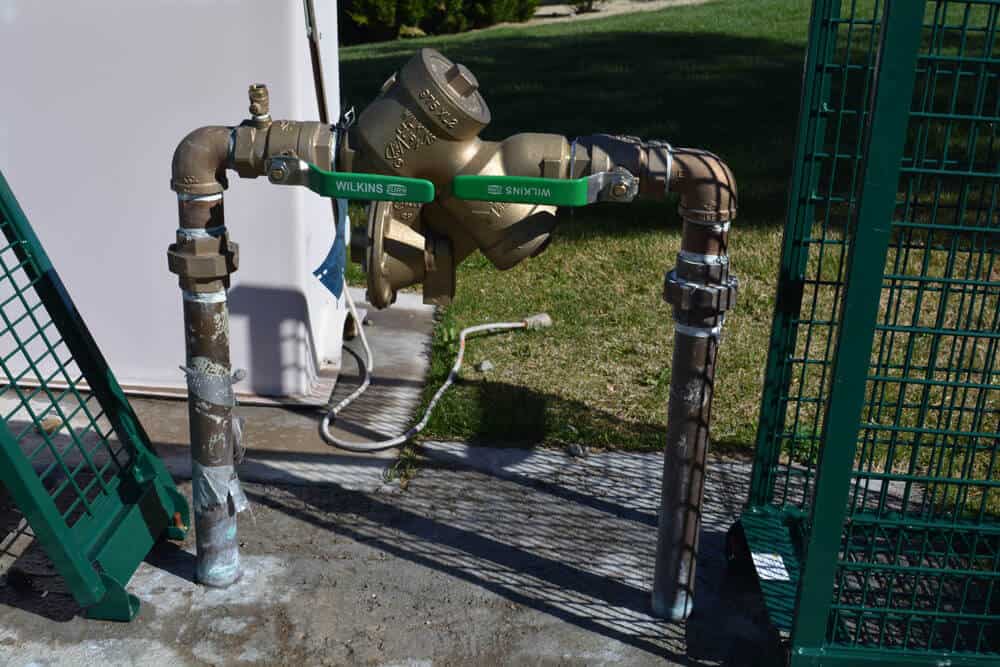
Your backflow preventer is that thing sitting outside, usually mounted near your water meter or along your main line.
You’ve probably walked past it a hundred times without thinking about it.
Here’s what it does. It keeps water from flowing backward into the public water supply.
Say there’s a pressure drop in the city main—maybe from a water main break or heavy usage during a fire.
Without a backflow device, contaminated water from your property could get sucked back into the system.
We’re talking pool chemicals, fertilizer runoff, whatever’s in your irrigation lines.
The device has check valves inside that close when they sense reverse flow.
There’s a pressure chamber between them, and if things go wrong, a relief valve opens to dump water out. That’s your warning sign something’s failed.
Now here’s where coastal living gets tricky. These devices have moving parts, springs, seals, chambers.
All of that is sitting outside in salt air and moisture. Day after day.
They’re not invincible.
Salt Air Corrosion: The Silent Plumbing Destroyer
Salt air is aggressive. You know how your car starts showing rust spots after a few years near the beach? Same principle, but worse for plumbing components.
Salt particles in the air settle on metal surfaces. They attract moisture.
That creates an electrolyte solution that speeds up corrosion.
Brass fittings, bronze check valves, stainless steel springs—all of them corrode faster in coastal environments than they would inland.
The check valves inside your backflow device? They need to seal tight and move freely.
When corrosion builds up, they stick. Or they don’t seal completely. That’s when you start getting drips from the relief valve, or worse, the device fails during testing.
External parts corrode too. Mounting bolts seize up. Test cocks freeze in place.
I’ve seen devices where the corrosion was so bad you couldn’t even get the test plugs out without breaking something.
Homeowners often rely on San Diego backflow testing to confirm device performance and catch early signs of salt damage.
Annual testing is required by code in most areas, but in coastal zones it’s really more about prevention than compliance.
You want to catch corrosion before it becomes a full replacement job.
Copper pipes corrode differently than they do inland.
You get pitting on the exterior surfaces, which can eventually work through to cause pinhole leaks.
It doesn’t always show obvious green oxidation either. Sometimes it’s just a rough texture that you wouldn’t notice until you’re dealing with a leak.
High Humidity and Constant Moisture Exposure
Humidity near the coast sits higher year-round. Even when it’s not raining, everything’s damp.
Your backflow device sits outside exposed to this.
Morning dew, fog, moisture in the air—it all settles on the device and doesn’t fully dry out. The seals and O-rings inside? They’re rubber or synthetic compounds.
Constant moisture exposure breaks them down faster.
I used to think humidity wasn’t that big of a deal compared to direct water exposure. But over time, it’s the constant dampness that does the damage. Seals get soft, lose their shape, stop sealing properly.
Metal components develop surface rust even if they’re supposed to be corrosion-resistant. It’s not dramatic. It’s just persistent.
Indoor plumbing deals with humidity too, though in a different way.
If your home doesn’t have great ventilation, moisture condenses on cold water pipes.
You’ll see it as sweating pipes in crawl spaces or basements—well, if you have a basement near the coast, which isn’t common. But the principle holds.
That condensation can lead to corrosion on copper pipes or fittings over years of exposure.
Coastal Storms, Heavy Rains, and Flooding
When storms hit coastal areas, they hit different. You get wind-driven rain, storm surge, flooding that comes from multiple directions at once.
Your backflow device is designed to handle some water exposure.
Rain isn’t supposed to hurt it. But during heavy storms, especially if you get any kind of flooding, that device can end up submerged or partially submerged.
Here’s what happens then. Water gets into spaces it’s not supposed to be.
Even though the device is outdoors-rated, submersion is different from rain.
Sediment-laden water can work its way past seals. If there’s saltwater involved—say from storm surge—that’s even worse.
After a major storm, backflow devices sometimes fail testing. The springs got compromised. Sediment got lodged in the check valves. The relief valve mechanism got fouled.
Flooding also affects your underground pipes.
Shifting soil, debris movement, pressure from saturated ground—all of that can stress pipe joints.
PVC can shift at connections. Older metal pipes can crack if the soil moves enough.
Your irrigation backflow device sits even lower to the ground usually. Those are more vulnerable during floods.
Shifting Sandy Soil and Foundation Movement
Sandy soil near the coast doesn’t hold steady like clay or rock-based soil inland. It shifts. Erodes. Settles unevenly.
That movement affects everything buried in the ground or attached to your foundation.
Water lines can shift at connection points. If you’ve got an older home with galvanized or even copper lines running through the foundation, any settlement or shift can stress those joints.
I’ve seen cases where a backflow device that was level when installed is now tilted because the ground settled underneath the mounting pad.
That might not sound like a big deal, but if it’s tilted enough, the relief valve might not drain properly. Water sits in places it shouldn’t, which speeds up corrosion.
Foundation movement also affects interior plumbing. If your slab or foundation shifts even slightly, rigid pipe connections can crack. You might not see it immediately. But over time, stress fractures develop.
Sandy soil also doesn’t provide the same protection for buried pipes that denser soil does.
Pipes can move more freely, which means more stress at connection points during ground shifts or heavy water flow.
Sand and Sediment Intrusion in Plumbing Lines
Here’s something that catches people off guard. Sand in the water lines.
It doesn’t happen all the time, but after storms or during periods of heavy water usage, sediment can get stirred up in municipal lines.
Near the coast, that sediment often includes fine sand particles.
Those particles make it past the city’s filtration. They come through your meter. And they end up in your plumbing.
Inside your backflow device, sand can wedge under check valves.
Just a few grains can prevent a valve from sealing completely. That causes the device to fail testing, and you’re looking at a rebuild or replacement.
Sand also wears on fixtures. Faucet aerators get clogged.
Washing machine inlet screens fill up. Toilet fill valves start running because sediment keeps them from closing all the way.
If you’ve got a water softener or filtration system, sand wears on those components too.
Resin beds can get fouled. Filter housings can develop leaks if sediment prevents a good seal.
You won’t always see sand coming out of your taps. Sometimes it’s just slightly cloudy water after heavy usage periods. But the damage happens whether you see it or not.
Temperature Swings and Sun Exposure
Coastal areas have milder temperature swings than inland, but sun exposure is intense, especially on devices mounted on south or west-facing walls.
UV radiation breaks down plastic components. If your backflow device has any plastic test cocks, covers, or labeling, those deteriorate faster in direct sun.
They get brittle, crack, fade to the point where you can’t read important markings.
The metal body itself heats up and cools down with day-night cycles.
That thermal expansion and contraction, repeated over years, can stress seals and joints. It’s not dramatic like a freeze event would be inland, but it’s constant.
PVC pipes exposed to sun also degrade. If you’ve got any above-ground irrigation lines or exposed plumbing, UV makes the PVC chalky and weak.
I’ve seen sprinkler lines that looked fine but cracked in your hand when you tried to work on them.
Temperature changes affect water pressure too, in subtle ways.
Warmer water takes up slightly more volume.
When your pipes heat up during the day, pressure increases marginally.
Not enough to cause problems usually, but it’s one more stress on seals and joints that are already dealing with salt and moisture.
Maintenance Tips for Coastal Homeowners
Right. So what do you actually do about all this?
First, get your backflow device tested every year. Not just because code says so, but because annual testing catches problems early. A failed test might just mean replacing some seals or springs.
Wait another year and you might need a whole new device.
Rinse your backflow device periodically.
Sounds simple, but just hitting it with fresh water from a hose knocks off salt buildup. Do this every few months, especially after storms.
Check for corrosion on visible plumbing. If you see green crusty buildup on copper pipes or white crusty stuff on brass fittings, that’s corrosion working.
Clean it off, but also understand that’s a sign the component is deteriorating.
Actually, while we’re on that—if you see corrosion on pipes inside your home, there’s probably more you’re not seeing behind walls.
Flush your water heater more often than you would inland.
Sediment accumulates faster in coastal areas. Once a year minimum. Twice is better.
Replace washing machine hoses every few years.
The braided stainless ones are better than rubber, but they still degrade faster near the coast. It’s cheap insurance against a flood.
Monitor your water pressure. If it seems to fluctuate a lot, that could indicate problems with your backflow device or the municipal supply. Get it checked.
Keep vegetation away from your backflow device.
I know it’s tempting to hide it behind shrubs, but you need airflow around it. Trapped moisture speeds up corrosion.
When to Replace vs. Repair a Backflow Device
This is where it gets into judgment calls.
If your device fails testing and it’s less than 10 years old, rebuilding usually makes sense. You replace the internal check valves, springs, seals, diaphragm if it has one.
A rebuild kit runs maybe $100-150, plus labor if you’re not doing it yourself.
But if the device is 15-20 years old and it’s failed testing? That’s borderline.
You can rebuild it, but you’re putting new internals into a body that’s been corroding for two decades.
How much longer will the body last? The mounting bolts? The test cocks?
If there’s visible corrosion on the body, especially around welds or connection points, replacement is probably the better move. You don’t want to invest in a rebuild only to have the body fail six months later.
When the relief valve is leaking constantly even after a rebuild, that often means the chamber itself is compromised. That’s a replacement situation.
Price-wise, a new device might run $400-800 depending on size and type. Installation is another $300-500 typically.
So you’re looking at close to $1000 total for a replacement versus maybe $200-300 for a rebuild.
That said, in coastal environments I lean toward replacement more often than I would inland. The environmental stress is just higher.
If a device has already lasted 15-20 years near the ocean, it’s done well. Don’t push your luck.
Wrapping This Up
Your plumbing takes a beating near the coast. It’s not always obvious. Most of the damage happens slowly.
But understanding what’s working against your system helps you stay ahead of problems.
Salt air, humidity, storms, sandy soil, sediment—these aren’t things you can eliminate. They’re part of living where you do.
What you can do is maintain things more proactively than you would inland.
Test that backflow device annually. Watch for corrosion. Flush sediment.
Replace components before they fail catastrophically.
Because the alternative is coming home to a flooded house or getting a notice from the city that your backflow device failed inspection and your water’s getting shut off until it’s fixed.
Neither of those is fun.
Take care of your coastal plumbing.
It’s working hard out there.
