

MDF gets a bad reputation sometimes.
People hear “medium density fiberboard” and they think cheap furniture that falls apart when you move it.
But here’s what I’ve learned after years of writing about home design and talking to builders – MDF has its place, and when you use it right, it can save you serious money while giving you professional-looking results.
I’ve toured homes where custom built-ins cost $15,000, and I’ve seen DIY projects using MDF that look just as good for a fraction of that price.
The trick is knowing where to use it and where not to.
Today I’m walking through ten smart applications for MDF that actually make sense for custom home projects.
Some of these I’ve seen work beautifully. Others require a bit of planning to avoid disasters down the road.
10 Clever Ways To Use MDF For Custom Home Projects: The Versatile Veneer
Custom Built-In Shelving Units
This is probably the most common use for MDF, and it’s common for good reason. Built-in shelving units can transform a dead wall into serious storage space.
I’ve seen everything from floor-to-ceiling library walls to simple alcove shelves.
The key thing with MDF shelving is span. Don’t get ambitious and try to make shelves longer than about 28 inches without support.
MDF will sag over time if you load books or anything heavy on it.
Vertical dividers every couple feet work well. Paint grade MDF is perfect here because most built-ins get painted to match trim anyway.
One designer I spoke with a few years back swore by MDF for painted built-ins.
Said it saved clients thousands compared to poplar or other hardwoods, and once everything’s primed and painted you can’t tell the difference. That’s the truth of it.
Decorative Wall Paneling and Wainscoting
Wall paneling is having a moment right now. Shaker-style panels, board and batten, raised panels – all over design blogs and home tours.
MDF routes beautifully. Better than plywood actually.
You can get clean profiles without the splintering and tear-out you’d fight with real wood.
For wainscoting that’s going to be painted white or a solid color, MDF makes perfect sense. It’s stable, flat, and takes paint well once you prime it properly.
The router cuts on MDF create a smooth profile that sands to a really nice finish. I’ve seen entire dining rooms paneled with MDF that look like they cost a fortune.
Just remember to seal that top edge where the MDF meets the wall – moisture is not MDF’s friend.
Statement Headboards and Bed Frames
Upholstered headboards almost always use MDF as the base.
It’s flat, sturdy enough for the application, and nobody sees it under the fabric anyway.
But even painted headboards work well with MDF.
Tufted designs, geometric patterns, simple rectangles with trim detail – MDF handles it all.
The material stays flat against the wall, doesn’t warp like some plywoods can, and it’s easy to attach fabric or padding to.
For bed frames though you need to be more careful.
The frame structure itself should probably be solid wood or at least plywood in areas that bear weight. But decorative panels, headboard portions, footboards – those can absolutely be MDF if they’re painted.
Kitchen Cabinet Doors and Refacing
Cabinet refacing companies use MDF all the time.
New doors and drawer fronts can completely change a kitchen’s look without the cost of full replacement.
Shaker-style cabinet doors are everywhere right now, and MDF is ideal for that clean painted look. It’s stable, machines well, and costs way less than hardwood.
If you love the look of real wood but don’t want to pay solid timber prices, oak veneer MDF is the answer. That veneer gives you the grain and appearance of real oak at maybe half the price of solid oak doors.
The catch is you need good edge banding or paint.
Exposed MDF edges look rough and they’ll soak up moisture around sinks. But done properly, MDF cabinet doors last for years.
I’ve seen kitchens with MDF doors that are ten years old and still look great.
Floating Shelves and Window Seats
Floating shelves are another place where MDF shines.
These shelves attach to the wall with hidden brackets and appear to float.
They’re popular in modern and minimalist spaces.
Since they’re usually painted and relatively short spans, MDF works perfectly.
Light enough to mount securely, stable enough not to warp.
You build a hollow box, slide it over the bracket, paint it, and you’re done.
Window seats are a bit different.
The top surface that people sit on should be plywood – it’s stronger and won’t sag under weight. But the front panel, any decorative trim, the sides if they’re not load-bearing – MDF handles those parts fine. Just think about where stress and weight go.
Custom Closet Organizers
Closet systems from companies like California Closets often use melamine-coated MDF.
It’s flat, comes in various finishes, and holds up well in the low-moisture environment of a closet.
Building your own closet organizer with MDF can save hundreds compared to installed systems.
Shelves for shoes and sweaters, dividers for different sections, vertical panels to hang rods from – all work well with MDF.
Again, watch your spans. Shelves loaded with heavy items need support. And if you’re in a humid climate, make sure the closet has air circulation.
Trapped moisture and MDF don’t mix.
Accent Ceilings and Beams
Coffered ceilings and decorative beams can add architectural interest to flat, boring ceilings.
Real wood beams are heavy and expensive. Hollow beams built from MDF are neither.
You can build three-sided beam boxes from MDF, paint them to look like timber, and attach them to the ceiling.
From the ground they look substantial. Up close you can tell they’re not solid, but that’s not the point. The visual effect is what matters.
Ceiling panels and coffers work the same way.
MDF stays flat, doesn’t crack like drywall can, and creates clean lines when painted. Just make sure whoever installs it knows what they’re doing – ceiling work isn’t a beginner project.
DIY Home Office Furniture
Desktops, shelving units, file drawer boxes – home offices need a lot of custom-sized pieces that don’t always come in standard dimensions.
A desktop spanning between two file cabinets can be MDF if it’s thick enough.
Three-quarter inch MDF with a good finish or laminate surface works for most desk situations. It won’t sag under the weight of a computer and some books.
Shelving above the desk, small cabinets, drawer fronts – all good applications.
The nice thing about building office furniture is you control the exact dimensions. That awkward wall space becomes perfectly fitted storage instead of wasted area.
Custom Media Centers and Entertainment Units
Big entertainment centers used to be everywhere. They’re less common now with flat screens, but custom media storage still makes sense.
MDF is perfect for the cabinet boxes, shelves, and doors on these units.
You’re not dealing with a lot of weight usually – maybe some gaming consoles and AV equipment.
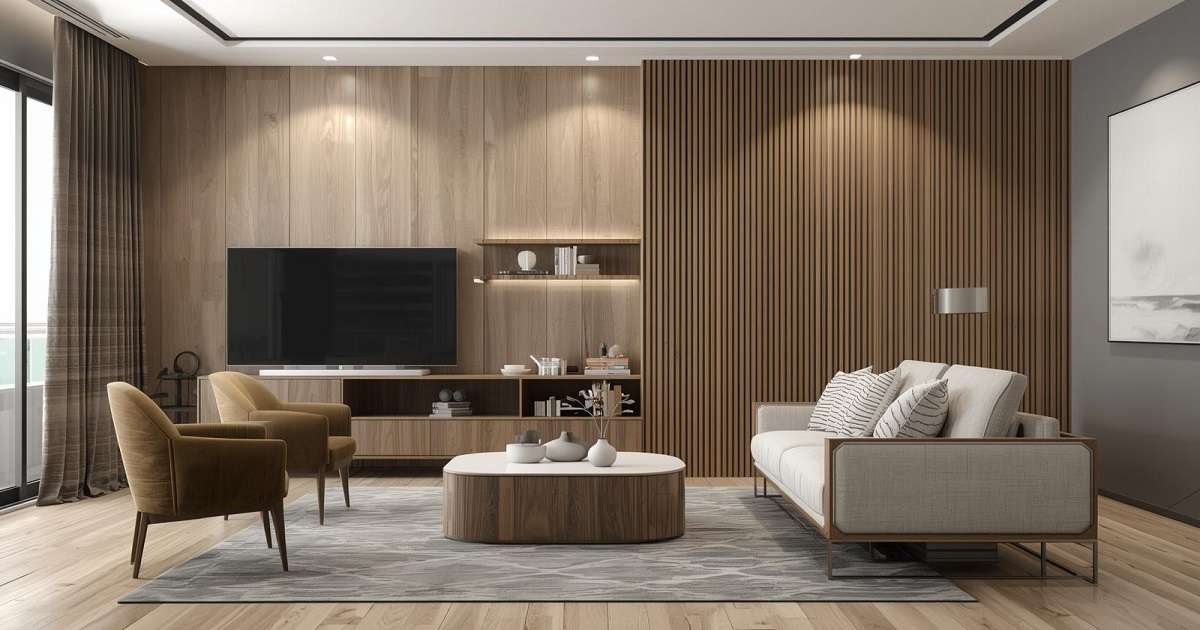
The units get painted or finished to match the room. If you want a wood-grain look, veneered MDF gives you options.
Cable management holes are easy to drill in MDF too.
Cleaner than trying to drill through hardwood without tear-out. Just plan your layout before you start cutting.
Decorative Trim, Molding, and Architectural Details
This one’s interesting because it’s where I see MDF used most successfully.
Baseboards, crown molding, door casings, wainscoting rails – lots of trim these days is MDF.
Pre-primed MDF trim comes ready to install and paint. It’s cheaper than pine or poplar, and it doesn’t have knots or defects.
The profiles are consistent because they’re machined, not milled from varying pieces of lumber.
Does it hold up as well as wood? Maybe not in high-traffic areas where baseboards get kicked and bumped.
But for crown molding eight feet up the wall, or door casings that don’t take much abuse, MDF trim works just fine and costs less.
Conclusion
I’m not here to tell you MDF is better than plywood or solid wood.
It’s not, at least not for most things. But it has legitimate uses, and understanding where it works saves money without sacrificing results.
The common thread through all these projects is paint. MDF almost always gets painted.
If you want natural wood grain showing, you need real wood or quality veneer. But for painted projects, especially built-ins and trim, MDF deserves consideration.
Just remember the rules. Keep it away from moisture.
Don’t span shelves too far without support. Pre-drill before screwing into edges. Wear a dust mask when cutting it because that dust is nasty.
I’ve watched enough home renovation projects over the years to know that budget matters.
Most people can’t afford to build everything from premium hardwoods.
MDF lets you get custom work done at prices that actually make sense. That’s worth something.
Use it smart, know its limitations, and MDF can help you create custom home projects that look way more expensive than they actually were. That’s really the point of all this.
