

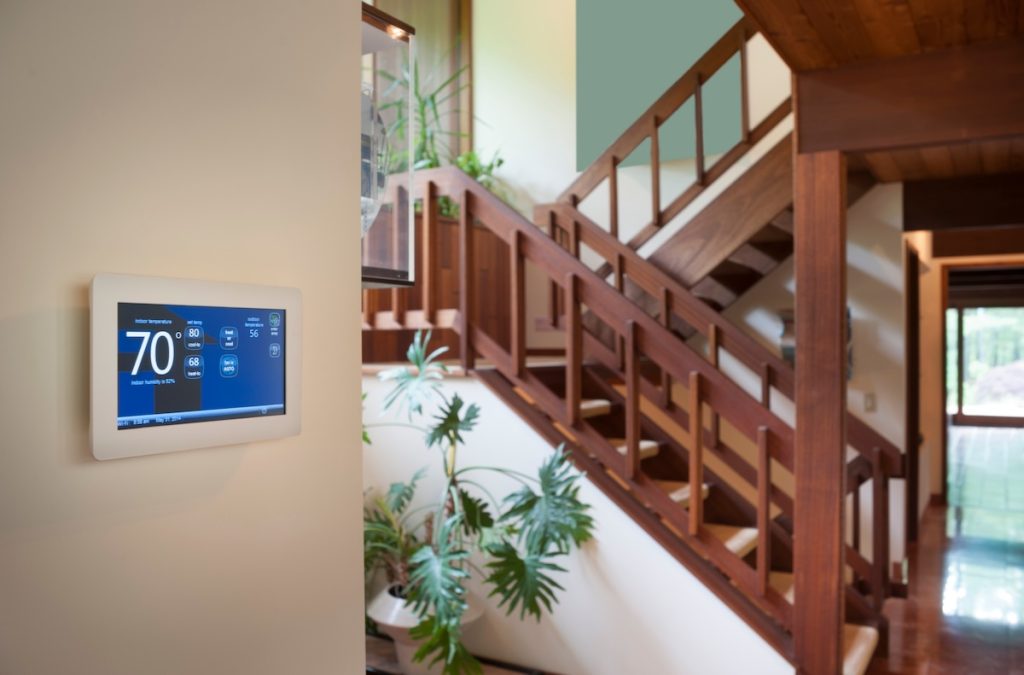
Look, smart home tech isn’t just about yelling at Alexa to turn off the lights anymore. It’s gotten way more interesting than that.
More homeowners, especially Millennial buyers, than ever are thinking about their property not just as a place to live, but as a system — one that consumes energy, generates waste, and interacts with the environment in ways that add up over time.
And here’s what’s actually cool about this shift—it’s not expensive anymore. Not like it used to be.
You don’t need a $50,000 remodel to make your house work smarter and cost less to run.
Some of these upgrades pay for themselves in two, three years tops. Others? They start saving you money the day you install them.
So if you’re sitting in your house right now, looking at that electric bill or that water statement and thinking “there’s got to be a better way”—yeah, there is. And we’re going to walk through what actually works, what’s worth your money, and what you can skip.
8 Smart Home Improvements That Boost Sustainability And Cut Your Bills
What Are Smart Sustainable Home Improvements?
Okay, so what are we even talking about here?
Smart sustainable improvements are basically any upgrade that does two things at once: uses technology to automate or optimize how your house runs, and reduces how much energy, water, or other resources you’re burning through every month.
Think of it like this. You could manually turn off every light in your house when you leave. Or you could install motion sensors and scheduling so the house just… does it.
Same result, except one actually happens consistently.
The sustainable part means we’re not just being lazy with automation.
We’re picking tech that cuts waste. LED bulbs that dim based on natural light.
Thermostats that learn when you’re home. Appliances that run during off-peak hours when electricity is cheaper and cleaner.
And honestly? These aren’t futuristic anymore. You can pick most of this stuff up at a big box store on a Saturday morning.
Smart Energy Management Systems
This is where most people should start. Because if you don’t know where your energy is going, you can’t fix it.
Smart energy monitors plug into your electrical panel—or sometimes they’re just a clamp that goes around your main line—and they tell you exactly what’s using power in your house. Real-time. Down to the appliance.
Sense and Emporia are two brands I’ve seen work really well.
They’re a couple hundred bucks, maybe three if you get someone to install it. But once it’s in, you’ll see your fridge cycling, your AC kicking on, that old freezer in the garage that’s secretly costing you $30 a month.
I had a client once who found out their pool pump was running 24/7 because the timer died.
They didn’t notice for six months. The energy monitor caught it in two days.
Now, if you want to get a little more serious, you can pair this with a whole-home energy management system. These actually control when certain things run.
Your EV charges at 2am when rates are low.
Your dishwasher waits until solar production peaks if you’ve got panels.
It’s not quite “set it and forget it,” but it’s close. And the savings stack up fast, especially if you’re on a time-of-use rate plan.
Energy-Efficient Smart Lighting
Lighting is low-hanging fruit. Really low.
If you’re still using incandescent bulbs anywhere in your house, stop reading and go replace them. I’ll wait.
Okay, so LEDs are the baseline now. But smart LEDs take it further.
Philips Hue, LIFX, even the cheap ones from Wyze—they all let you dim, schedule, and automate based on occupancy or time of day.
But the real trick isn’t just the bulbs. It’s the system.
Motion sensors in hallways, bathrooms, closets.
Those lights turn on when you walk in, off when you leave.
No switches, no thinking about it. I put these in my house three years ago and I haven’t touched a light switch in the back hallway since.
Daylight sensors are underrated too. If you’ve got big windows, you don’t need full brightness at noon.
Smart systems can dim your lights automatically as the sun comes up, ramp them back up as it sets. Your eyes don’t even notice, but your meter does.
And if you’ve got outdoor lighting—landscape lights, porch lights, whatever—put those on timers or motion detection.
There’s no reason your front porch needs to be lit up like a stadium from dusk to dawn.
Smart Appliances That Save Energy
This one’s tricky because “smart appliance” has become a marketing term that means almost nothing.
Your fridge doesn’t need WiFi. It really doesn’t.
But there are some appliances where the smart features actually matter.
Washers and dryers that let you delay the start time so they run during off-peak hours.
Dishwashers that sense how dirty the dishes are and adjust water and heat.
If you’re replacing an appliance anyway—like it died, you’re mid-renovation, whatever—look for Energy Star rated models first. Then see if the smart version costs a lot more.
Sometimes it’s $50, sometimes it’s $400. You’ve got to decide if the features are worth it.
Smart ovens are interesting. June makes one that’s essentially a countertop convection oven with a camera inside.
It recognizes what you’re cooking and adjusts time and temp. I’m not sure I’d buy it just for energy savings, but if you’re bad at cooking (guilty), it might save you from burning dinner and having to order takeout in plastic containers.
Oh, and smart power strips. These are cheap—$20, $30—and they cut phantom power draw from devices that are “off” but still sipping electricity.
Your TV, cable box, game consoles, all that stuff. A smart strip kills power completely when it detects the devices are in standby.
Solar Power Integration with Smart Tech
Solar panels used to be this huge complicated thing that required an engineering degree to understand.
They’re still not simple, but they’re way better. And when you add smart tech into the mix, they actually start making sense for more people.
If you’ve already got solar, or you’re thinking about it, the smart integration side is where things get interesting.
Battery storage systems like the Tesla Powerwall or Enphase aren’t just backup power.
They’re smart about when to store, when to use, when to sell back to the grid.
Let’s say your utility has time-of-use rates. Your battery charges during the day from your panels, then discharges in the evening when rates spike.
You’re not buying expensive power, you’re using what you made when it was cheap to make.
And if you don’t have solar yet but you’re considering it, definitely look at systems that come with monitoring apps.
You want to see production in real-time, know when a panel is underperforming, track how much you’re offsetting.
Some of the newer micro-inverter systems let you monitor each panel individually.
So if a tree branch falls on one, or a bird decides to nest on another, you know exactly which one is the problem.
Actually, I should say—solar isn’t for everyone. If you’ve got a shaded roof, if you’re in an area with low electricity costs, if you’re planning to move in two years, the math might not work.
Run the numbers first. Get multiple quotes. Don’t let anyone pressure you.
Smart Water Management Solutions
Water bills are sneaky. They don’t feel as urgent as energy bills, but man they add up.
Smart irrigation controllers are probably the best place to start here.
Rachio and RainMachine are the two big names.
They connect to local weather data and soil moisture sensors, and they only water your lawn when it actually needs it.
I’ve seen people cut their outdoor water use by 30, 40 percent just by stopping the stupid cycle of watering right before a rainstorm. The controller knows rain is coming.
It delays the cycle. You save water, you save money, your lawn doesn’t drown.
Inside the house, smart leak detectors are a no-brainer. Flo by Moen, Phyn, even the cheap Govee sensors you stick under sinks—they catch leaks before they become disasters.
I had a washing machine hose start leaking once.
Slow drip, nothing dramatic. But over six months it wasted probably 500 gallons and warped the floor underneath. A $25 sensor would’ve caught it in day one.
If you want to get fancy, whole-home water monitors can track usage by fixture.
You’ll know if your toilet is running, if your shower is a water hog, if there’s a leak somewhere in the line.
They’re a few hundred bucks installed, but if you’ve got an older house or you’re serious about cutting usage, they’re worth it.
Home Insulation and Smart Windows
Okay so insulation isn’t “smart” in the tech sense. You can’t app-control your attic insulation.
But you can absolutely use smart tools to figure out where you’re losing heat and cold, and that’s half the battle.
Thermal cameras—like the FLIR One that plugs into your phone—let you see cold spots in your walls, around windows, near doors.
They’re a couple hundred bucks and they’ll show you exactly where your money is leaking out of your house.
Once you know where the problems are, you can air seal, add insulation, whatever. That’s not smart home tech, that’s just good home maintenance. But the camera makes it visible.
Smart clean windows though. That’s a thing now.
Electrochromic glass—windows that tint automatically based on sunlight—are coming down in price.
They’re still expensive, don’t get me wrong. But if you’re doing a major renovation or building an addition, they’re at least worth looking at.
They reduce solar heat gain in summer, let light in during winter, and they cut HVAC costs by keeping your indoor temp more stable.
I’ve seen claims of 20 percent savings, though I think that’s optimistic for most climates.
Smart blinds are a cheaper option. Lutron, IKEA, even cheap options on Amazon.
They open and close on schedule or based on sun position. Same principle—keep heat out in summer, let it in during winter.
Automation and Smart Home Hubs
Here’s where it all ties together.
You can have smart lights and a smart thermostat and smart plugs, but if they’re all operating independently, you’re not getting the full benefit. They need to talk to each other.
That’s where a smart hub comes in. Google Home, Amazon Echo, Apple HomeKit, Samsung SmartThings—pick your poison.
They let you create routines and automations that involve multiple devices.
Like, “when I leave for work, turn off all the lights, set the thermostat to away mode, and turn off the coffee maker.” One trigger, multiple actions.
Or “when the sun sets, close the blinds, turn on the porch light, and switch the living room lights to warm dim.” You’re not tapping four different apps. It just happens.
Home Assistant is the enthusiast option if you really want control.
It’s open-source, runs on a Raspberry Pi or a dedicated box, and it integrates basically everything. But it’s got a learning curve. I wouldn’t recommend it unless you like tinkering.
The other thing hubs let you do is set up occupancy-based automation.
If nobody’s home, the house goes into eco mode. Thermostat drops, lights off, smart plugs kill power to non-essential stuff.
When someone arrives, it wakes back up. Gradual, not all at once, so it doesn’t feel like you’re walking into a haunted house.
Voice control is nice too, I guess. I use it sometimes. But honestly the best automation is the kind you never think about. It just runs in the background, saving you money, and you forget it’s even there.
Conclusion
Look, you don’t have to do all of this at once.
Pick one thing. Maybe it’s a smart thermostat because your HVAC bill is brutal in summer. Maybe it’s smart lighting because you’re tired of leaving every light on when you leave the house.
Start there. See what you save. Then add another layer.
The beautiful thing about smart home tech now is that most of it works together.
You’re not locked into one brand or one system. You can build it piece by piece, on your timeline, on your budget.
And yeah, some of this stuff is cool and fun to show off. But the real payoff is opening your utility bill three months later and seeing it drop by 20, 30, 40 bucks.
That’s real money. That’s money you can spend on literally anything else.
Or just save it. Because your house is doing the work now.
