

So you’ve called the HVAC company. Scheduled the appointment. And now you’re waiting for the technician to show up and you’re not entirely sure what’s going to happen.
During a planned HVAC repair visit, many homeowners feel unsure about what will happen behind the scenes.
Which makes sense. You’re letting someone into your home to mess with a system you probably don’t fully understand.
And the whole time you’re wondering if you’re about to get hit with a massive bill for something that could’ve been simple.
I’ve been writing about homes and interior systems for over fifteen years now.
Covered everything from celebrity home renovations to basic maintenance guides. And the HVAC question? It comes up constantly. People want to know what’s normal, what’s not, and whether they’re getting ripped off.
Here’s what I can tell you. A good comprehensive HVAC repair visit follows a pretty clear pattern.
There are steps that should happen every single time. And when you know what those steps are, you can tell the difference between a thorough professional and someone just going through the motions.
This isn’t about making you an expert. It’s about giving you enough knowledge to feel confident when that technician walks through your door.
7 Ways To Repair HVAC: What to Expect During a Comprehensive HVAC Repair Visit
Look, not every repair visit is the same. Some problems are obvious. Others take real detective work.
But whether your system stopped working completely or it’s just acting weird, a comprehensive visit should cover certain bases. Every time.
The technician needs to figure out what’s wrong, why it’s wrong, and what it’ll take to fix it.
And honestly? A lot of what happens is just looking. Listening. Testing things methodically.
The best technicians treat your system like a puzzle. They don’t just swap parts and hope for the best.
They trace the problem back to its source. Then they explain it to you in a way that actually makes sense.
What follows are the seven main things you should expect during a proper HVAC repair visit.
Not every visit will include repairs. Sometimes it’s just diagnostics. But these steps? They’re pretty standard across the board.
Initial Assessment and System Evaluation
First thing the technician does when they arrive? They’re going to want to talk to you.
Not small talk. Real questions. When did you first notice the problem? What exactly is happening? Any weird sounds, smells, or performance issues? Is one room freezing while another is hot? Did anything change recently?
This conversation matters more than you’d think. Because sometimes what you’ve noticed gives them a huge head start on where to look.
If you mention that the problem started right after a thunderstorm, that’s a clue. If it’s been gradual over months, that’s a different kind of clue.
After that they’re heading to your thermostat. Checking settings. Making sure it’s actually calling for heating or cooling when it should be.
Verifying the batteries if it’s got them. Looking at any error codes displayed.
Then they’ll check out the indoor unit. Usually that’s near your furnace or air handler. They’re looking at the general condition.
Is the area around it clear? Any visible water damage? Rust? Weird smells coming from it?
They might pull the filter right away. A clogged filter causes so many problems that it’s worth checking immediately.
Some technicians won’t even go further until they’ve seen the filter because if it’s totally blocked, that could be your whole problem right there.
This initial walkthrough usually takes ten to fifteen minutes. Maybe less if the problem is obvious. It’s about getting oriented to your specific system and situation.
Diagnostic Testing and Troubleshooting
Now we get into the actual testing. This is where tools come out.
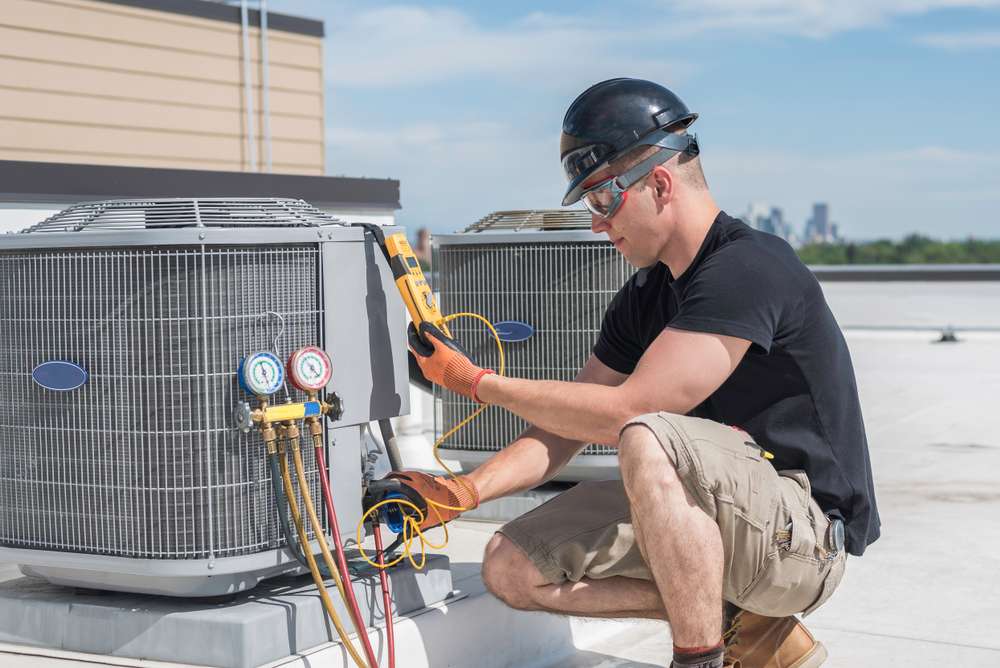
If you’ve got a cooling problem, they’re likely hooking up gauges to check refrigerant pressure.
These gauges tell them a lot. Too much pressure, too little pressure, imbalanced pressure between different parts of the system. Each reading points toward different possible issues.
They’ll check electrical connections. Use a multimeter to verify voltage at different points. Make sure the capacitor isn’t dead or dying. Test the contactor to see if it’s pitted or burnt.
Pull the disconnect for safety while they’re poking around in the electrical panel of the outdoor unit.
For heating issues they might check gas pressure if you’ve got a gas furnace. Look at the flame. Listen to the ignition sequence. Verify that safety switches are working properly.
The blower motor gets attention too. Is it running at the right speed? Drawing the right amount of current? Any bearing noise or wobble?
One thing good technicians do is check airflow. Because restricted airflow causes all kinds of secondary problems.
They might measure temperature difference between return air and supply air to see if the system is actually heating or cooling effectively.
Sometimes they’ll run the system and just watch it go through its cycles. Listen for abnormal sounds. Feel for vibration. Check that everything kicks on and off when it should.
This testing phase can take anywhere from twenty minutes to over an hour depending on how tricky the problem is.
The technician might turn things on and off multiple times. Test under different conditions. It’s methodical.
Identifying the Root Cause of the Problem
So they’ve done the assessment. Run the tests. Now comes the part where they put it all together.
Good technicians explain what they found. Not in super technical jargon but in terms you can actually understand.
“Your capacitor is failing. That’s basically the part that gives your compressor and fan motor the jolt they need to start up. When it’s weak, the motor struggles or doesn’t start at all.”
They might show you the problem if it’s visible. A cracked condensate drain line. A corroded wire connection. A coil covered in dirt and debris.
What you want here is a clear explanation that connects what you experienced to what they found.
If you called because your AC was blowing warm air and they found low refrigerant, they should explain how those two things relate. And more importantly, why the refrigerant is low. Because refrigerant doesn’t just disappear. If it’s low, there’s a leak somewhere.
This is also when they should tell you if there are multiple problems. Sometimes one issue causes another.
A clogged drain line leads to water backing up which triggers a safety switch which shuts down the whole system. The immediate problem is the safety switch tripping. The root cause is the clogged drain.
Watch out for technicians who jump straight to “you need a new system” without clearly explaining what’s actually wrong with your current one. That’s not always a scam but it’s worth questioning.
Repair Recommendations and Cost Breakdown
Once they know what’s wrong, they should give you options. Not always multiple options but at least a clear recommendation.
They’ll tell you what needs to be fixed. What parts are required. How long the repair will take. And yeah, what it’s going to cost.
This is where things can feel uncomfortable. Nobody loves surprise expenses. But a straightforward technician will break it down. Labor cost. Parts cost. Any other fees.
If it’s a minor repair, they might offer to do it right then and there.
Swap the capacitor, replace the contactor, clean the coil. Things they can handle in one visit with parts they carry on the truck.
For bigger repairs they might need to order parts. Schedule a follow-up visit. Or if it’s a major component failure like a compressor or heat exchanger, they’ll talk through whether repair makes sense versus replacement.
Age of your system matters here. If your AC is fifteen years old and needs a $2000 repair, they should mention that a new system might be worth considering instead. Not as a sales pitch necessarily but as honest advice.
Get everything in writing. The diagnosis, the recommended repair, the cost estimate. You want documentation of what they found and what they’re proposing to fix it.
Some companies give you options. The full fix versus a temporary patch. Premium parts versus standard. It’s not always available but when it is, it helps you make a decision that fits your budget and situation.
Post-Repair Testing and Quality Checks
Let’s say they’ve done the repair. Replaced the bad part. Made the fix. They’re not done yet.
A thorough technician will test the system afterward to make sure everything is actually working. Not just that the new part functions but that the whole system is operating the way it should.
They’ll let it run for a bit. Check temperatures. Verify airflow.
Listen for any unusual sounds. Make sure refrigerant pressures are where they should be now. Confirm that all safety switches are working.
If they replaced an electrical component, they’re checking voltage again. Making sure connections are tight. That nothing is overheating.
For condensate drain work, they might pour water through to verify it’s draining properly. For ductwork repairs, they’ll check that air is flowing to all the vents like it should.
This testing phase proves the repair worked. It also catches any secondary issues that might’ve been hiding behind the main problem. Sometimes fixing one thing reveals another weak point.
They should show you that the system is working. Let you feel the cold air or warm air.
Demonstrate that the strange noise is gone. Whatever the original complaint was, you should see evidence that it’s resolved.
Maintenance Tips and Preventative Recommendations
Before they leave, a good technician will give you some advice. Stuff you can do to keep your system running better and avoid future problems.
Change your filter regularly. That’s always number one.
They’ll probably tell you how often based on your specific situation. Got pets? Change it more often. Allergies? Maybe go with a better filter.
They might suggest cleaning your outdoor unit periodically. Just spraying it down with a hose to keep the coils clear of dirt, grass clippings, cottonwood seeds, all that stuff that builds up.
Makes a real difference in efficiency.
If they noticed your thermostat is ancient, they might recommend upgrading to a programmable or smart model. Not as a sales pitch but because it genuinely helps with comfort and energy bills.
Some technicians mention checking your condensate drain occasionally. Making sure it’s not clogged. You can usually pour a cup of water in and watch it drain out to verify it’s clear.
They’ll probably recommend annual maintenance.
A checkup before cooling season and another before heating season. Or at least one tune-up a year. Because catching small problems early beats dealing with a breakdown on the hottest day of summer.
Listen to this advice but don’t feel pressured. Good maintenance tips should feel helpful, not like a sales pitch. The technician has just spent time looking at your system.
They can see what it needs. That knowledge is valuable.
What a Comprehensive HVAC Repair Visit Should Include
So putting it all together, here’s what you should expect from start to finish.
Communication. The technician explains what they’re doing and why. Answers your questions. Doesn’t talk down to you or hide behind technical language.
Thoroughness. They don’t just guess or swap parts randomly.
They actually diagnose the problem using proper tools and testing.
Transparency. You get a clear explanation of what’s wrong, what it costs to fix, and why. In writing preferably.
Quality work. The repair is done right. Parts are installed correctly. Connections are tight. Everything is tested afterward.
Cleanup. They don’t leave a mess. Tools get packed up. Any packaging from new parts goes with them.
Documentation. You should get some kind of service report. What they found, what they did, what parts were used, warranty information.
And honestly? Respect for your home and your time. They should show up when scheduled or call if they’re running late. Use drop cloths if they’re tracking through your house.
Not leave muddy footprints or scratch your floors with their toolbox.
The whole visit might take an hour. Might take three hours. Depends entirely on the problem. But you should never feel rushed or confused about what’s happening.
Conclusion
Here’s what it comes down to. An HVAC repair visit shouldn’t be a mystery.
You’re paying someone to fix a problem with one of the most important systems in your home. You deserve to understand what’s happening.
What was wrong. How they fixed it. What you can do to prevent it next time.
The best repair visits leave you feeling informed, not confused. Confident the problem is actually solved, not just temporarily patched. And yeah, hopefully the bill makes sense too.
Not every technician works the same way. Some are more communicative than others.
Some companies have different procedures. But the core elements should be there. Assessment, diagnosis, clear recommendations, quality repair, testing, and some guidance on keeping your system healthy.
Next time you schedule an HVAC repair, you’ll know what to expect. What questions to ask. What should definitely happen and what’s optional.
That knowledge puts you in control of the situation instead of just hoping for the best.
Your HVAC system keeps your home comfortable year-round. When it needs repair, make sure it’s getting the comprehensive attention it deserves.
