

Your energy bills are climbing. Mine too. And if you’re still heating with traditional systems, you’re probably throwing money out the window—literally.
Heat pumps have been around for decades, but most people still don’t really get what they do or why they’re worth considering.
Here’s the thing: they’re not magic, but they do work differently than what you’re used to. And that difference can cut your heating costs by half or more.
Let me walk you through exactly how.
9 Ways Heat Pumps Help Reduce Energy Bills And Improve Home Efficiency
What Is a Heat Pump and How Does It Work?
Right, so before we get into savings, you need to know what you’re actually dealing with.
A heat pump doesn’t create heat the way your gas boiler does.
It moves heat from one place to another. Think of it like a refrigerator running backwards.
Your fridge takes heat from inside the box and dumps it out the back. A heat pump takes heat from outside—even when it’s cold—and moves it inside your home.
Sounds weird, right? How do you get heat from cold air?
Turns out there’s heat energy in air down to about -15°C. The refrigerant inside the heat pump evaporates at super low temperatures, absorbing that outside heat.
Then it gets compressed, which makes it hot. Really hot. That heat then transfers to your home’s heating system.
There are a few main types. Air source heat pumps pull heat from outside air.
Ground source heat pumps pull it from the ground through buried pipes.
There’s also air-to-water systems that heat water for radiators or underfloor heating, and air-to-air systems that blow warm air directly into rooms.
Each works a bit differently, but the principle’s the same: move heat rather than burn fuel to make it.
Why Heat Pumps Are More Energy Efficient
Here’s where it gets interesting.
When you burn gas or oil, you’re converting fuel to heat.
Best case scenario with a modern condensing boiler, you get about 90-95% efficiency. For every unit of gas you burn, you get 0.9 units of heat in your home.
Heat pumps don’t work that way. They use electricity to move heat, not create it.
For every unit of electricity a heat pump uses, it can deliver 3 to 4 units of heat. Sometimes more.
That ratio is called the Coefficient of Performance, or COP.
A COP of 3 means you get three times more heat out than the energy you put in. That’s not breaking physics—you’re just moving existing heat around rather than generating it from scratch.
In colder weather, the COP drops a bit because the heat pump has to work harder. But even at a COP of 2.5 in winter, you’re still doing way better than burning fossil fuels.
Key Ways Heat Pumps Reduce Energy Bills
Let’s get specific about where the savings actually come from.
First, that efficiency ratio means lower running costs.
If your heat pump has a COP of 3 and electricity costs three times as much as gas per kilowatt-hour, you break even. But in most cases, the numbers work out better than that, especially if you’re replacing oil, LPG, or electric resistance heating.
Second, heat pumps run at lower temperatures for longer periods.
This sounds counterintuitive, but it’s more efficient. Rather than blasting heat in short bursts, they maintain a steady comfortable temperature.
Less cycling on and off means less wasted energy.
Third, many modern heat pumps have smart controls that optimize performance based on outside temperature and your home’s needs.
They learn your patterns and adjust accordingly.
A well-insulated home with a correctly sized heat pump will use substantially less energy than the same heat pump in a draughty, uninsulated building.
That last bit matters more than most people realize. You can’t just slap a heat pump on a poorly insulated house and expect miracles.
Types of Heat Pumps for Different Homes
Not all heat pumps suit all homes. Let’s break this down.
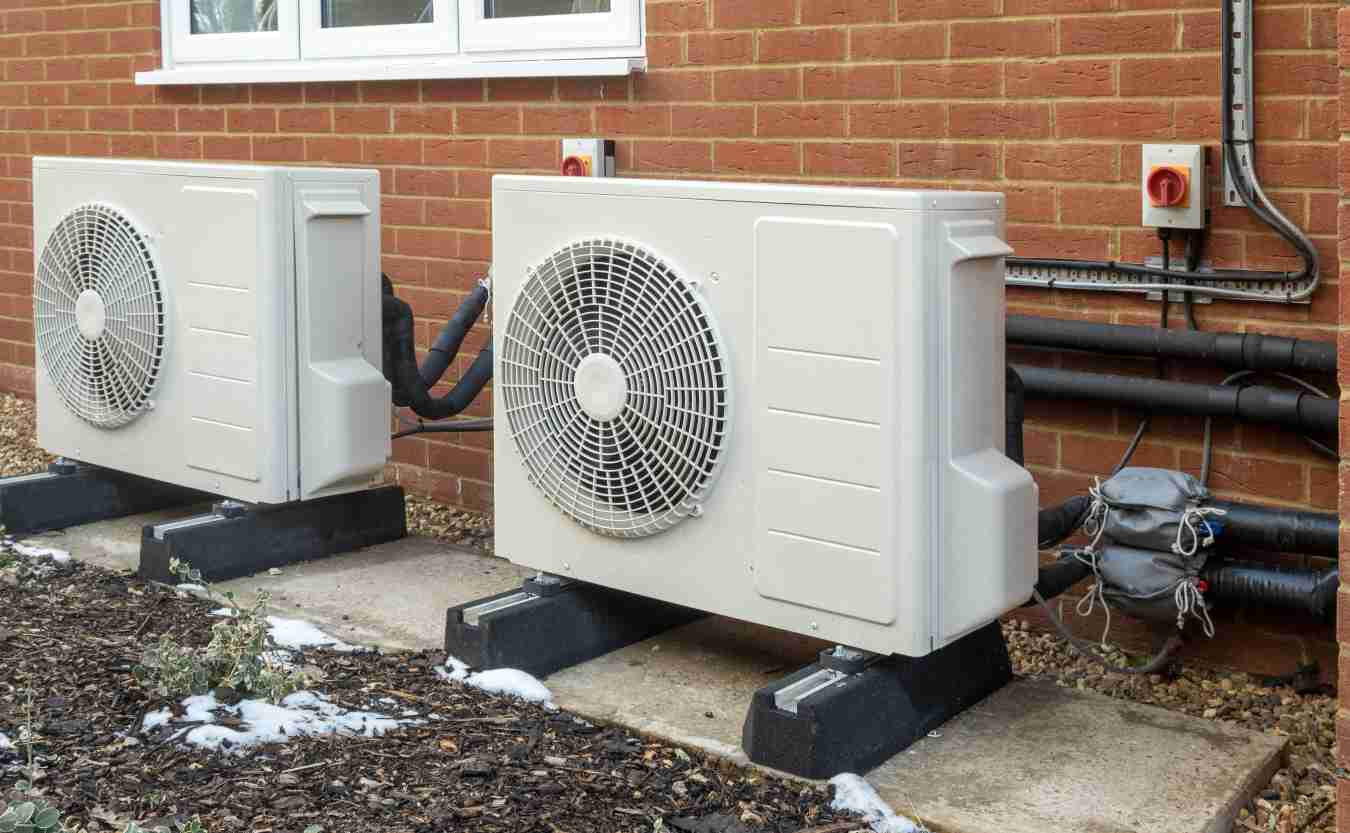
Air source heat pumps are the most common. They’re easier to install and cheaper upfront. You get a unit outside that looks a bit like an air conditioner and pipework connecting to your heating system inside. These work well for most homes, but performance drops when outside temperatures get really low.
Ground source heat pumps are more expensive to install because you need to dig up your garden or drill boreholes. But the ground temperature stays more stable year-round, so you get more consistent performance. If you’ve got the space and budget, these are brilliant.
Air-to-water systems connect to your existing radiators or underfloor heating. These are what most people get when retrofitting. In places like New Zealand’s South Island, where older homes were often built without insulation or central heating, heating specialists in Dunedin have seen strong demand for air-to-water retrofits.
Air-to-air systems are basically reversible air conditioners. They heat in winter, cool in summer. They’re cheaper but don’t provide hot water and won’t work with radiators.
Your choice depends on your budget, your property, and what heating system you already have.
Cost vs. Savings: Is a Heat Pump Worth It?
This is the big question, isn’t it?
Heat pumps aren’t cheap to install. Air source systems typically run £7,000 to £13,000 installed. Ground source can hit £20,000 to £45,000. That’s a lot of money upfront.
But here’s what you need to consider. Running costs can be 50% lower than oil heating, 40% lower than LPG, and 30-40% lower than old electric storage heaters.
Compared to gas, it’s more variable and depends on your electricity rates and the heat pump’s COP.
Most people see payback in 7 to 15 years through energy savings alone. Government grants can cut that time significantly. In the UK, the Boiler Upgrade Scheme offers £7,500 off air source heat pumps.
Also, maintenance costs are lower. No annual gas safety checks, no boiler breakdowns every few years. Heat pumps typically last 15 to 20 years with minimal servicing.
Don’t just look at the sticker price. Calculate the whole-life cost.
Environmental Benefits of Heat Pumps
Maybe you don’t care about carbon emissions. But honestly, this bit matters for your bills too.
Heat pumps produce about 3 to 4 times less CO2 than gas boilers.
As the electricity grid gets cleaner with more renewables, that number improves without you doing anything.
No combustion means no carbon monoxide risk, no gas leaks, no oil spills. Safer for your family.
But here’s the financial angle: carbon taxes and energy regulations are only getting stricter.
Gas and oil will likely get more expensive relative to electricity over time. Installing a heat pump now means you’re somewhat future-proofed against policy changes.
Factors That Affect Heat Pump Efficiency
Pay attention here, because this is where people mess up.
Insulation is critical. I can’t stress this enough. If your home leaks heat, no heating system will be efficient. Heat pumps run at lower flow temperatures than boilers, typically 35-50°C instead of 60-80°C. That means your home needs to hold onto heat better.
Sizing matters. Too small and the heat pump can’t keep up on cold days. Too large and it cycles inefficiently. Get a professional heat loss calculation done. Don’t guess.
Installation quality makes or breaks performance. A badly installed heat pump will disappoint you. Find installers who actually know what they’re doing, not just someone who watched a YouTube video.
Your radiators might need upgrading. Because heat pumps run cooler, you might need bigger radiators to deliver the same heat. Or switch to underfloor heating.
Climate obviously plays a role. Heat pumps work in cold climates—they’re common in Scandinavia—but performance drops below about -5°C. If you live somewhere that regularly hits -20°C, you might need backup heating.
Common Myths About Heat Pumps
Let’s clear up some nonsense you’ve probably heard.
Myth: Heat pumps don’t work in cold climates. Wrong. Modern cold-climate heat pumps work fine down to -15°C or lower. They’re standard in Norway and Sweden, which get colder than most of the UK.
Myth: You need underfloor heating. Nope. Many homes keep their existing radiators. You might need to add a radiator or two, or swap some for larger ones, but total replacement isn’t always necessary.
Myth: Heat pumps are noisy. The outside unit makes some noise, similar to an air conditioner. But modern units are pretty quiet, around 40-50 decibels from a few meters away. About as loud as a fridge.
Myth: They’re constantly running so they must cost a fortune. They run longer but at lower intensity. Think of it like highway driving versus city traffic. Steady and efficient beats stop-start every time.
Myth: You can’t get hot water. Air-to-water systems absolutely provide hot water. They heat a cylinder just like a regular boiler does.
Tips to Maximize Heat Pump Efficiency and Savings
Right, so you’ve got a heat pump or you’re getting one. Here’s how to make sure you’re getting the most out of it.
Sort your insulation first. Before you even install a heat pump, get your loft insulated, seal draughts, and upgrade windows if they’re single-glazed. The better insulated your home, the better any heating system performs.
Set it and forget it. Heat pumps work best when you maintain a consistent temperature rather than turning them on and off. Set your target temperature and leave it. This feels wrong if you’re used to timing a boiler, but trust the process.
Use weather compensation controls. These adjust the heat pump’s output based on outside temperature. On milder days, it runs cooler and more efficiently. On cold days, it works harder. It’s automatic optimization.
Keep the outdoor unit clear. Make sure snow, leaves, and debris don’t block airflow around the outside unit. It needs to breathe.
Get it serviced annually. Check refrigerant levels, clean filters, make sure everything’s running properly. This keeps efficiency high and extends the lifespan.
Monitor your energy use. Many heat pumps have apps or displays showing performance and energy consumption. Actually look at them. If something seems off, you can catch problems early.
Consider time-of-use electricity tariffs. Some energy suppliers offer cheaper electricity at night. If your heat pump can heat your home and hot water cylinder during off-peak hours, you save more.
Conclusion
Heat pumps aren’t perfect for everyone, and they’re not the answer to every heating problem. But for most homes, they offer a real opportunity to cut energy bills while reducing your carbon footprint.
The upfront cost is real. So is the need for proper insulation and professional installation.
But the running costs are lower, the maintenance is simpler, and the technology is proven.
If you’re replacing an old oil boiler or electric heating, it’s almost a no-brainer.
If you’re replacing gas, the numbers are tighter but still often work out, especially with grants.
Do your homework. Get multiple quotes. Make sure your home is ready. But don’t dismiss heat pumps just because they’re different from what you’re used to.
Energy prices aren’t going down. Heat pumps offer a way to take control of your heating costs for the next 15 to 20 years. Worth considering, at minimum.
