

Okay, so here’s something nobody tells you when you’re designing a kid’s bedroom.
You spend all this time picking out the perfect paint color, the cute bedding, maybe a nice lamp. And then you realize the room needs to do two completely different jobs. It’s gotta be a play zone. And also a sleep sanctuary.
And somehow these two purposes are supposed to exist in the same space without looking like a toy store exploded.
I’ve been writing about interior design for over 15 years now, and I cannot tell you how many parents I’ve seen struggle with this exact problem.
They buy a bright foam play mat for safety. Then they add a bedroom rug because, well, the room needs one. And suddenly the space looks chaotic. Nothing talks to each other.
But here’s what I’ve learned from covering celebrity homes and working with designers who actually get it—the secret isn’t choosing between function and style.
It’s finding pieces that do both.
That’s where luxe play mats and bedroom rugs come in.
These aren’t your basic foam tiles or whatever cheap rug you grabbed because it was on sale.
We’re talking about thoughtfully designed pieces that actually work together, that make a kid’s room feel intentional instead of accidental.
So yeah, let’s talk about how to make this work in your home.
How Playtime To Bedtime Luxe Play Mats And Bedroom Rugs That Blend Beautifully
Look, the whole concept here is pretty straightforward. Kids need safe places to play.
Bedrooms need to feel cozy and put-together. Usually these two goals fight each other.
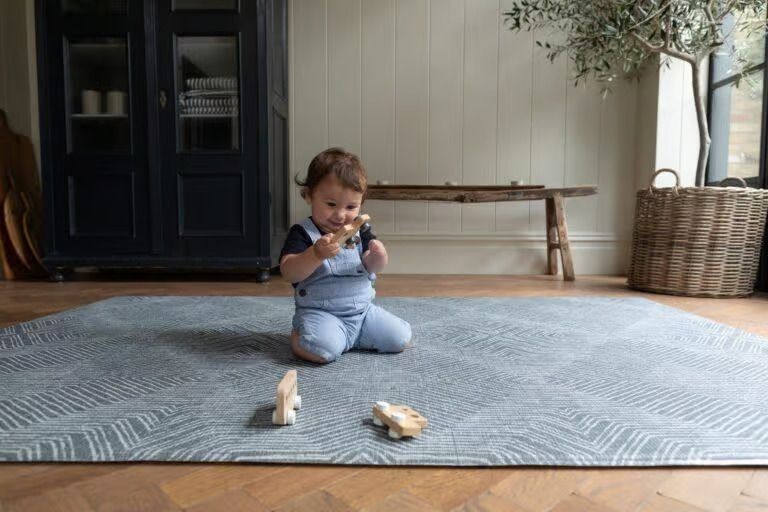
Luxe play mats for indoor play offer a safe and comfortable space for children to engage in imaginative and creative activities indoors.
That’s the function part. But the newer generation of these mats? They’re designed to actually look good. Like, good enough that you don’t need to hide them when guests come over.
Same goes for bedroom rugs that are made with kids in mind. They’re not just decorative.
They handle spills, they’re soft for sitting, they anchor the furniture layout.
When you choose both pieces with intention, thinking about how they relate to each other, you create this seamless flow.
The play area doesn’t look like an afterthought. The sleeping area doesn’t feel too precious. Everything just… works.
What Are Luxe Play Mats and Bedroom Rugs?
So first, let’s get clear on what we’re actually talking about.
Luxe play mats are basically elevated versions of those interlocking foam squares your neighbor probably has.
But instead of bright primary colors and alphabet letters, these use neutral tones, organic shapes, and sophisticated patterns. They’re made from materials like:
- High-density foam with fabric coverings
- Quilted cotton with memory foam padding
- Natural rubber with wool or cotton toppers
- Padded vinyl in modern prints
The padding is still there for safety when your toddler inevitably trips over their own feet. But the aesthetic? Completely different.
Bedroom rugs for kids’ spaces are area rugs that balance durability with design. They’re typically:
- Stain-resistant (because juice boxes are a thing)
- Low pile or flatweave (so toy cars can actually roll)
- Made from easy-clean materials
- Designed in patterns that hide the inevitable wear
The difference between these and standard rugs is they’re purpose-built for the chaos of childhood while still looking like they belong in a styled room.
Why Blending Play Mats and Bedroom Rugs Matters
Here’s the thing that took me years to fully appreciate.
A kid’s bedroom isn’t just one zone. It’s multiple zones crammed into whatever square footage you’ve got. And when those zones clash visually, the whole room feels off.
I remember touring this celebrity’s home in the Hollywood Hills a few years back.
Beautiful house, top-tier designer. But their four-year-old’s room? It had this gorgeous hand-knotted wool rug in soft grays and creams.
And then in the corner, a screaming bright blue foam mat that looked like it came from a completely different universe.
The designer actually admitted to me they struggled with that space.
The parents wanted the fancy rug. The nanny insisted on the foam mat for safety.
Nobody thought about whether these two elements should, you know, coordinate.
When your play mat and bedroom rug work together, a few things happen:
The room looks intentional. Like you actually planned it instead of just accumulating stuff.
It feels bigger. Cohesive color stories make spaces expand visually.
It’s easier to keep “clean looking.” When everything coordinates, a few scattered toys don’t destroy the whole vibe.
Your kid gets better design education. Yeah, I said it. Children absorb aesthetic lessons from their environments. A thoughtfully designed room teaches them that spaces can be both functional and beautiful.
Design Features That Help Them Blend Beautifully
So what actually makes a play mat and bedroom rug work together?
Color Palette Coordination
This is the big one. If your bedroom rug is in soft neutrals—think oatmeal, warm gray, gentle taupe—your play mat should pull from that same family.
Not an exact match. Just related.
I’ve seen this done really well with a cream and gray bedroom rug paired with a play mat in quilted beige with subtle geometric stitching. They’re not identical. But they’re clearly from the same design story.
Complementary Patterns
Here’s where it gets fun. You don’t want matchy-matchy. That actually looks more juvenile.
Instead, think about pattern scale.
Maybe your bedroom rug has a large-scale abstract design.
Your play mat could be solid or have a micro-pattern. Or flip it—solid rug with a gently patterned mat.
The key is varying the scale so they complement rather than compete.
Material Conversation
Okay, this sounds fancy but it’s simple. Your materials should feel related.
A wool bedroom rug pairs beautifully with a cotton-topped play mat. A jute or sisal rug works with a natural rubber mat.
You’re creating a textural story. Everything doesn’t need to match, but it should feel like it’s in conversation.
Thickness and Height
This is practical but also visual. If your bedroom rug is a flatweave and your play mat is three inches of squishy foam, that height difference is jarring.
Better to choose a bedroom rug with some pile or a lower-profile play mat so the transition feels smooth.
Functional Benefits for Parents and Children
Let’s get real about why this matters beyond just looking good.
For Parents:
You’re not constantly annoyed by the visual chaos. I know that sounds shallow, but hear me out.
When your kid’s room stresses you out aesthetically, you’re less likely to spend time there. That bedtime story feels like a chore in a space that bothers you.
But with so many types of rugs available on the market, it can be overwhelming to choose the best rugs for bedroom spaces that actually work with your play area setup.
Cleaning is also easier. Luxe play mats typically have removable, washable covers.
Quality bedroom rugs resist stains better. When both are designed for real life, maintenance becomes manageable.
For Children:
Safe play space that doesn’t feel like a separate kid ghetto. Children are perceptive.
They notice when their stuff is treated as less-than. A beautiful play mat that coordinates with the room tells them their activities matter.
Comfort during floor play. Good padding under building blocks, puzzle time, or just sprawling with books makes those activities more enjoyable.
Smooth transitions between activities. When playtime winds down, the room doesn’t need to transform dramatically. The same cohesive space holds both energy and calm.
Styling Tips for a Cohesive Bedroom Look
Okay, so you’re sold on the concept. How do you actually make this work?
Start with your biggest piece. Usually that’s the bedroom rug.
Choose that first based on your room’s color scheme and furniture. Then find a play mat that coordinates.
Layer intentionally. If you’re using both a room-size rug and a play mat, the play mat typically goes on top in the designated play zone. But make sure there’s enough of the bedroom rug showing that it still registers as the foundation.
Mind your furniture layout. Your bed, dresser, and other furniture should sit on or partially on the bedroom rug. This anchors them. The play mat then defines a separate but related zone—usually not under furniture.
Use the 80/20 rule. About 80% of your room’s floor covering should be your main bedroom rug or the floor itself. The play mat takes up maybe 20%. This keeps proportions feeling right.
Consider a rug pad. Under both pieces, actually. This prevents slipping, adds cushion, and helps everything stay put during enthusiastic play sessions.
Don’t forget vertical coordination. Your wall color, curtains, and bedding should also pull from the same color family as your rug and mat. This creates that pulled-together look.
I saw this executed perfectly in a Brooklyn brownstone I covered last year.
Designer used a large ivory and gray bedroom rug under the bed and nightstands.
Play mat was a padded quilted cotton in warm gray positioned near the window for natural light.
Walls were a soft white, curtains in natural linen, bedding in ivory and charcoal. Everything whispered to everything else.
The mom told me she’d previously had a bright alphabet foam mat in there and it drove her crazy every time she walked in. The switch made the whole room feel like it finally made sense.
How to Choose the Right Option for Your Home
Right, so let’s make this practical.
Assess Your Actual Needs
How old is your kid? A one-year-old needs more padding than a six-year-old.
What do they actually do on the floor? Gentle reading versus aggressive Lego construction requires different solutions.
Be honest about your cleaning tolerance. Some materials need professional cleaning. Others you can literally hose off in the backyard. Know yourself.
Measure Your Space
Don’t guess. Measure the room. Measure your furniture footprint. Figure out how much floor space is actually available for both pieces.
Standard play mat sizes range from 4×4 feet to 6×8 feet. Bedroom rugs… well, that depends entirely on your room size. But common kids’ room sizes are 5×7 or 6×9 feet.
Set a Realistic Budget
Luxe play mats typically run $200-$600 depending on size and materials. Quality kids’ bedroom rugs range from $150-$800.
You’re probably looking at $400-$1200 total for both pieces. Yeah, that’s more than cheap foam tiles and a Target rug. But these should last you years, through multiple children potentially.
Test Materials If Possible
Order swatches. Visit showrooms. Touch things. You need to know if that “soft cotton” is actually soft or if that “easy clean surface” feels weirdly plasticky.
Read Real Reviews
Not just the five-star ones. Read the three-star reviews. That’s where people tell you the real issues—the rug sheds like crazy, the mat’s cover shrunk in the wash, the colors weren’t accurate.
Think Long-Term
Your toddler will eventually become a kid, then a teen. Can this rug transition with them? Some patterns and colors age up better than others.
A sophisticated geometric works from age two to twelve. A pastel rainbow situation… maybe not.
Conclusion
Look, here’s what I’ve learned covering homes and design for all these years.
The spaces that work best for families aren’t the ones that sacrifice function for beauty or beauty for function. They’re the ones that refuse to choose.
Your kid’s bedroom can be safe for play and still look like it belongs in your thoughtfully designed home. Luxe play mats and bedroom rugs that coordinate make this possible.
They’re proof that you don’t have to give up your aesthetic standards just because you have children.
Start with one room. Maybe your youngest kid’s bedroom.
Get the pieces right. Watch how much better the space feels.
And then maybe you’ll be like the parents I interview who eventually redo all the kids’ rooms because they finally understand how good this can be.
Your home should work for everyone in it. Including the small humans who primarily interact with it from floor level.
